
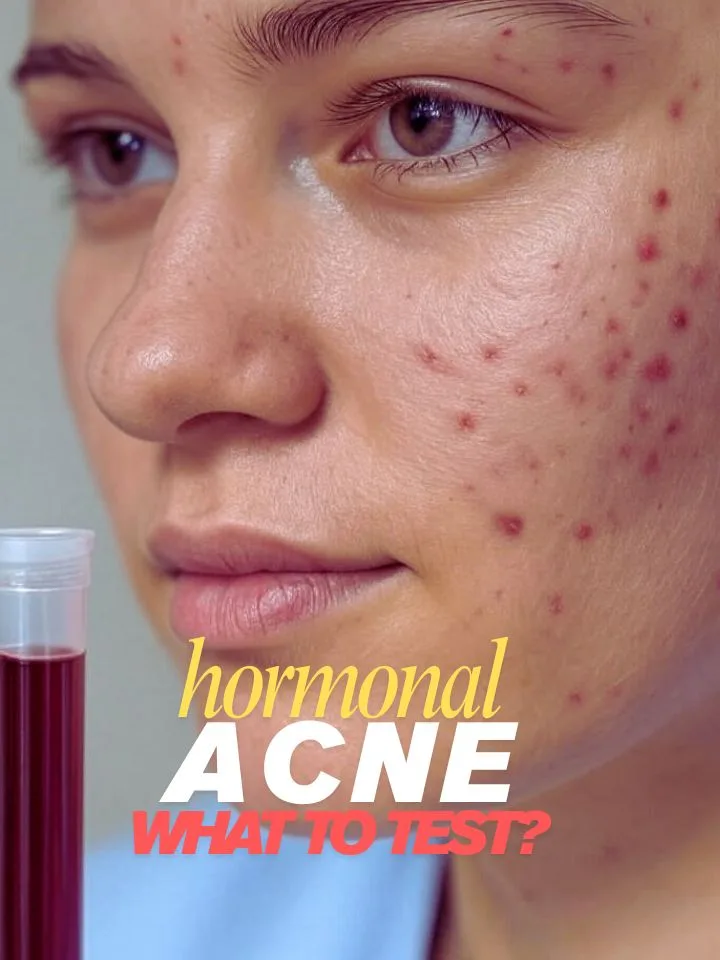
A painful spot on your chin finally settles, then another appears before your next period. If this sounds familiar, hormones may be contributing to your acne. The useful next step is to understand the pattern, what you have already tried and whether you have other symptoms that need assessment.
Hormonal acne can occur with normal blood hormone levels. At Derma Clinic in Basundhara, Kathmandu, a consultation can help you decide which treatments fit your skin and whether blood tests would add useful information.
What is hormonal acne?
Hormonal acne is a common description for acne influenced by androgens, hormones present in everyone. These hormones affect oil production. Together with blocked follicles, inflammation and changes involving skin bacteria, this can lead to blackheads, whiteheads and inflamed spots.
Some people have increased androgen levels. Others have acne despite results within the laboratory’s reference range because the skin can be sensitive to ordinary hormonal activity. Hormonal influences can contribute during adolescence and adulthood.
Breakouts may cluster around the chin and jawline or flare before a period. These patterns are clues for a consultation. The location of a spot alone cannot confirm a hormone disorder.
Hormonal acne symptoms and when to seek care
Tell your dermatologist if your acne repeatedly follows your menstrual cycle, returns after treatment or includes deep, tender lumps. Also mention irregular or missed periods, new coarse facial hair, thinning scalp hair or difficulty becoming pregnant. These details can change which investigations are appropriate.
Book an appointment early if acne is leaving scars, causing persistent dark marks or affecting your confidence and daily life. A sudden marked change in acne together with rapidly increasing facial hair or a deeper voice needs prompt medical assessment.
Other conditions can resemble acne. Itchy, similar-looking bumps, a rash around the mouth or irritation after using a new cream may need a different approach. Bring the products you use so your doctor can check them. Our article on fungal acne and similar-looking bumps explains another condition that may need assessment.
Do you need blood tests for hormonal acne?
Testing starts with a clinical question. A dermatologist reviews your symptoms, medicines, menstrual history where relevant and skin examination before deciding whether hormone investigations would help. Persistent acne by itself does not establish an endocrine disorder.
If there are signs of excess androgen activity or a possible underlying condition, selected tests may be appropriate. The following explains what a clinician may consider.
How to use these normal ranges
The examples below are published laboratory reference intervals for adult women, with ages and menstrual phases stated where relevant. They are not Derma Clinic laboratory ranges. Compare your result with the interval and units printed on your own report. Pregnancy, contraception, medicines, age and the assay can change interpretation. These tests are selected according to symptoms rather than ordered as one routine acne panel.
Total testosterone
How it relates to acne
Testosterone activates androgen receptors in sebaceous glands and can increase oil production. Total testosterone measures both protein-bound and unbound hormone.
Example normal range
8–60 ng/dL in women aged 19 years and older.
Understand high, low and normal results
Total testosterone reference interval and laboratory information
Free testosterone
How it relates to acne
Free testosterone is the small unbound fraction available to tissues. Increased availability can stimulate sebaceous glands even when total testosterone is within range.
Example normal range
Method-specific example for women aged 30 to under 35 years, reported by Mayo as less than 0.13–1.03 ng/dL. The lower-end notation reflects the assay’s reporting limit, so it is not a universal deficiency threshold.
Understand high, low and normal results
Free testosterone reference interval and laboratory information
DHEA-S
How it relates to acne
DHEA-S is produced mainly by the adrenal glands. It acts as a precursor for more active androgens that can influence oil production.
Example normal range
Women aged 18–30 years, 83–377 µg/dL; 31–40 years, 45–295 µg/dL; 41–50 years, 27–240 µg/dL.
Understand high, low and normal results
SHBG
How it relates to acne
Sex hormone-binding globulin is a liver-produced transport protein. It binds testosterone and influences how much remains freely available to tissues.
Example normal range
18.2–135.5 nmol/L in women aged 18–46 years.
Understand high, low and normal results
Luteinising hormone (LH)
How it relates to acne
LH is released by the pituitary and stimulates ovarian androgen production. It may contribute indirectly to acne when ovarian androgen output is increased.
Example normal range
Premenopausal follicular phase, 1.9–14.6 IU/L; luteal phase, 0.7–12.9 IU/L. These intervals do not apply to the midcycle ovulatory surge.
Understand high, low and normal results
Luteinising hormone (LH) reference interval and laboratory information
Follicle-stimulating hormone (FSH)
How it relates to acne
FSH supports ovarian follicle development and oestrogen production. It helps assess menstrual or ovarian function rather than directly measuring the hormonal drive to oil glands.
Example normal range
Premenopausal follicular phase, 2.9–14.6 IU/L; midcycle, 4.7–23.2 IU/L; luteal phase, 1.4–8.9 IU/L.
Understand high, low and normal results
Follicle-stimulating hormone (FSH) reference interval and laboratory information
Fasting insulin
How it relates to acne
Insulin can promote ovarian androgen production and reduce SHBG. These pathways may increase androgen availability in some people with insulin resistance.
Example normal range
2.6–24.9 µIU/mL for the cited fasting serum assay. This reference interval is not a validated acne target or universal insulin-resistance cutoff.
Understand high, low and normal results
Fasting insulin reference interval and laboratory information
Cortisol
Use in acne assessment Reserved for a specific suspicion of a cortisol disorder. A routine morning cortisol measurement is unsuitable for screening for Cushing syndrome. A clinician chooses a validated test when indicated.
How it relates to acne
Cortisol participates in the stress response. Stress can accompany acne flares, and pathological cortisol excess can have skin effects, but a single serum result cannot show why acne worsened.
Example normal range
For the cited total serum cortisol method, morning 5–25 µg/dL and afternoon/evening 2–14 µg/dL. Other methods use different intervals.
Understand high, low and normal results
Prolactin
How it relates to acne
Prolactin is a pituitary hormone involved in milk production. Excess can disrupt reproductive signalling and menstruation. Its main relevance here is investigating an alternative explanation for menstrual symptoms.
Example normal range
4.8–23.3 ng/mL for nonpregnant adult women in the cited assay. Pregnancy and breastfeeding require different interpretation.
Understand high, low and normal results
Thyroid-stimulating hormone (TSH)
How it relates to acne
TSH signals the thyroid to produce thyroid hormones. Thyroid disease can affect menstrual cycles, hair and skin, so testing may help investigate accompanying symptoms.
Example normal range
0.3–4.2 mIU/L for adults aged 20 years and older in the cited assay. Pregnancy requires appropriate pregnancy-specific interpretation.
Understand high, low and normal results
Thyroid-stimulating hormone (TSH) reference interval and laboratory information
17-hydroxyprogesterone
How it relates to acne
This steroid precursor is used to investigate certain adrenal enzyme disorders, particularly nonclassic congenital adrenal hyperplasia. Such disorders can increase androgen production and resemble PCOS.
Example normal range
Adult women in the cited assay, follicular phase below 80 ng/dL; luteal phase below 285 ng/dL. These are upper reference limits rather than two-sided intervals.
Understand high, low and normal results
17-hydroxyprogesterone reference interval and laboratory information
Anti-Müllerian hormone (AMH)
Use in acne assessment Usually unnecessary for acne. AMH may help define ovarian morphology within an adult PCOS assessment when that information is needed. It is unnecessary when irregular cycles and hyperandrogenism already establish the relevant diagnostic features.
How it relates to acne
AMH is produced by small ovarian follicles. It reflects aspects of the follicle population and can be used within an adult PCOS diagnostic pathway. It is not a direct measure of acne-driving androgen activity.
Example normal range
Women aged 20–24 years, 1.2–12 ng/mL; 25–29 years, 0.89–9.9 ng/mL; 30–34 years, 0.58–8.1 ng/mL; 35–39 years, 0.15–7.5 ng/mL; 40–44 years, 0.03–5.5 ng/mL.
Understand high, low and normal results
Anti-Müllerian hormone (AMH) reference interval and laboratory information
When is the best time to test hormones for acne?
For an androgen assessment, aim for an early-morning sample, usually 8–10 am, after an overnight fast when instructed. Where practical, use the early follicular phase. Day 1 is the first day of proper menstrual bleeding. Days 2–5 are a commonly used early-follicular window, but follow the ordering clinician’s instructions.
If periods are irregular or absent
Your clinician can arrange sampling without waiting indefinitely for a period. Record the last menstrual period and any hormonal medication. Rapid symptom progression should be assessed promptly.
Timing for each investigation
| Test | Timing and preparation |
|---|---|
| Total testosterone | Morning, preferably early follicular phase, with the preparation requested for the androgen panel. |
| Free testosterone assessment | Use the same collection as total testosterone. Confirm whether the laboratory calculates free testosterone or uses a validated measurement method. |
| SHBG | Collect with testosterone so the results can be interpreted together. |
| DHEA-S | Can be collected with the morning androgen panel for convenience. Its cycle-related variation is less important than for several other steroid measurements. |
| 17-hydroxyprogesterone | Morning in the early follicular phase is preferred. Luteal-phase concentrations are higher and can complicate screening interpretation. |
| LH | If a baseline reproductive assessment is needed, early follicular sampling is commonly used. A midcycle surge has a different interpretation. |
| FSH | Early follicular sampling is commonly used for a baseline assessment. Interpretation may also require oestradiol and the menstrual history. |
| Prolactin | Follow the laboratory’s collection instructions, including time after waking and rest before sampling. Cycle day is generally less important than collection conditions. |
| TSH | No particular menstrual phase is usually required. Disclose thyroid medicines and biotin supplements to the clinician and laboratory. |
| AMH | Usually can be sampled across the cycle when indicated. Age, assay and hormonal contraception still affect interpretation. |
| Cortisol investigations | Timing depends on the specific diagnostic test. Late-night saliva, a timed urine collection and dexamethasone suppression each have their own protocol. |
| Fasting insulin | If specifically ordered, follow fasting instructions and interpret with glucose. Routine insulin testing has limited usefulness in PCOS care. |
Testing while using hormonal contraception
Combined contraceptive pills suppress circulating androgens and raise SHBG. If biochemical assessment is essential, a clinician may arrange a three-month interruption with suitable alternative contraception. Discuss this before making any change to your prescription.
Collection guidance is based on the Society for Endocrinology guideline on androgen excess. Your laboratory’s instructions take priority for the particular assay ordered.
Does hormonal acne mean you have PCOS?
Acne can occur in polycystic ovary syndrome, but acne alone is a relatively weak predictor of raised androgens. PCOS assessment considers menstrual or ovulatory changes, androgen excess and, when appropriate, ovarian features after other causes are excluded.
An ultrasound is needed in some assessments. Adults with both irregular cycles and hyperandrogenism may meet diagnostic criteria without it. Adolescent assessment follows different criteria. An LH-to-FSH ratio by itself cannot establish PCOS.
If your history suggests PCOS, your dermatologist may coordinate care with a gynaecologist or endocrinologist. Acne treatment and assessment of menstrual or metabolic concerns can then proceed together.
How is hormonal acne treated?
The plan depends on the type of spots, their severity, scarring risk, previous treatment and your preferences. Pregnancy plans and other medicines also matter. Your clinician can explain which options are available locally. For broader information about topical medicines and procedures, see our guide to acne treatment in Kathmandu.
Topical treatment
Topical retinoids help keep follicles clear. Benzoyl peroxide and other topical medicines may be combined according to your needs. Azelaic acid is another option, including when dark marks accompany acne. A manageable routine makes it easier to continue treatment.
Hormonal medicines for persistent acne
Hormonal medicines can help selected women with persistent acne. Suitability depends on medical history, pregnancy plans and other medicines.
Spironolactone
Spironolactone reduces the effect of androgens on the skin. Blood pressure, kidney function or potassium assessment may be needed according to individual risk.
Combined oral contraceptives
Certain combined oral contraceptives can help control acne. The prescriber checks suitability, including risks such as blood clots, before choosing a preparation.
Oral antibiotics and isotretinoin
An oral antibiotic may be used for inflammatory acne, generally alongside topical treatment and with its duration limited. Severe acne, scarring or inadequate response to suitable treatment may warrant discussion of isotretinoin. It requires medical supervision and pregnancy prevention where applicable.
Pregnancy and acne medicines
If you are pregnant, breastfeeding or planning pregnancy, discuss treatment before starting or continuing medication. Oral isotretinoin must never be used during pregnancy. Topical retinoids, spironolactone and some antibiotics are also unsuitable during pregnancy. Ask your clinician to select an appropriate alternative.
What about newer treatments?
Clascoterone is a topical prescription medicine that acts on androgen receptors. Its availability and suitability need checking locally. Procedures and newer products require a discussion of their evidence, risks and cost. A new mechanism or recent launch alone does not establish which option is best for your skin.
How long does improvement take?
Early improvement often takes several weeks. An initial treatment review is commonly arranged around 12 weeks, with earlier contact if side effects are troublesome. Hormonal treatment may need longer to show its full benefit. Maintenance treatment can help limit recurrence once acne improves.
Skin care for hormonal acne
A daily routine you can keep using
- Wash gently, without scrubbing or squeezing spots.
- Choose a moisturiser and sunscreen that suit acne-prone skin.
- Introduce prescribed products as directed and report persistent burning or peeling.
- Keep a brief record of flare dates, menstrual changes and treatment use to bring to follow-up.
Food, sleep and flare patterns
Food can be worth discussing when you notice a repeatable pattern. Evidence about specific diets remains limited, and restrictive eating is rarely a practical starting point. Aim for balanced meals and discuss major dietary changes with your clinician. Sleep and stress support may help you manage flares and the emotional burden of acne.
Dark marks after acne
Flat brown marks after a spot settles are different from indented scars. Preventing further inflamed spots and avoiding irritation are useful priorities before choosing treatments for the marks left behind.
Hormonal acne care at Derma Clinic Kathmandu
Bring a list of treatments you have tried, how long you used them and any previous reports. Photos taken during a flare can help if your skin is clearer on the day. Mention pregnancy plans and any menstrual or hair changes.
Ask which treatments fit your diagnosis, whether tests would change the plan and when to return. Testing costs depend on the investigations selected. Request an itemised estimate after assessment.
Visit Derma Clinic
4th Floor, Bishal Bhawan, Basundhara Chowki, Kathmandu.
Call 01-5918555 to enquire about appointments.
Questions patients often ask
What do hormonal acne tests cost in Kathmandu?
The total depends on the tests selected, the laboratory and the methods used. Ask for an itemised estimate after your consultation. Bring previous reports so your clinician can decide whether repeat testing would add useful information.
What should I ask at my follow-up?
Ask whether the treatment has had enough time to work, how to manage irritation and whether your results change the plan. Explain what you have actually been able to use. A simpler routine may be easier to maintain.
Can hormonal acne happen with regular periods?
Yes. Regular periods and normal hormone results can occur alongside acne influenced by hormonal activity. Your treatment can still be tailored to your symptoms.
Which blood test confirms hormonal acne?
There is no single confirmatory blood test. Selected investigations can help identify an underlying hormonal condition when symptoms suggest one.
Will I need an ultrasound?
That depends on your history and the question being investigated. Your clinician can explain whether it would add information to a PCOS assessment.
Why does acne return after antibiotics?
Acne can persist after a course ends. A follow-up review can check whether maintenance treatment, a different medicine or further assessment is appropriate.
Can men have hormonal acne?
Androgens contribute to acne in men too. Treatment choices depend on the person, and medicines commonly used for hormonal acne in women may be unsuitable for men.
Where can I read more about everyday acne concerns?
Our acne questions and answers covers common concerns about spots, skin care and treatment.
Can treatment permanently cure hormonal acne?
Many people achieve substantial control, but recurrence is possible. Discuss a realistic follow-up and maintenance plan, particularly if previous courses helped only temporarily.
Sources and further reading
Each hormone section links to its laboratory reference information. The guidance below supports treatment and test selection.
- Society for Endocrinology guideline on androgen excess in women
- Endocrine Society guidance on testing for Cushing syndrome
- MedlinePlus prolactin testing and preparation
- American Academy of Dermatology acne guideline summary, 2024
- American Academy of Dermatology patient information on hormonal therapy
- NICE guideline NG198, acne vulgaris management
- International evidence-based guideline for PCOS, 2023
This article supports discussion with a clinician. Treatment and investigations depend on an individual assessment.