
Last Medically Reviewed: July 28, 2026
TL;DR: Fast Facts on Acne Treatment
- Consistency is key: Prescription acne treatments take 8 to 12 weeks to show significant results. Skin cells need time to turn over.
- Moisturizer is mandatory: Even extremely oily skin needs hydration. Skipping moisturizer damages your skin barrier, causing glands to produce even more oil.
- Sunscreen prevents marks: UV rays turn red acne spots into permanent dark marks. Use a gel or aquagel SPF daily.
- Never pop pimples: Squeezing drives bacteria deeper, creating painful cysts and permanent pitted scars.
- Combination therapy works best: Layering the right topical serums (like Niacinamide or Salicylic Acid) with dermatologist-prescribed oral medications offers the highest success rate.
Table of Contents
- 1. Understanding Acne: More Than Just Pimples
- 2. Factors That Induce or Exacerbate Acne
- 3. Over-the-Counter & Prescription Serums
- 4. Selecting the Right Sunscreen and Moisturizer
- 5. Simple Acne Routine: Morning and Night
- 6. Comprehensive Medical Treatments
- 7. Modern Innovations in Acne Care
- 8. Clinical Procedures & Technologies
- 9. Frequently Asked Questions (FAQ)
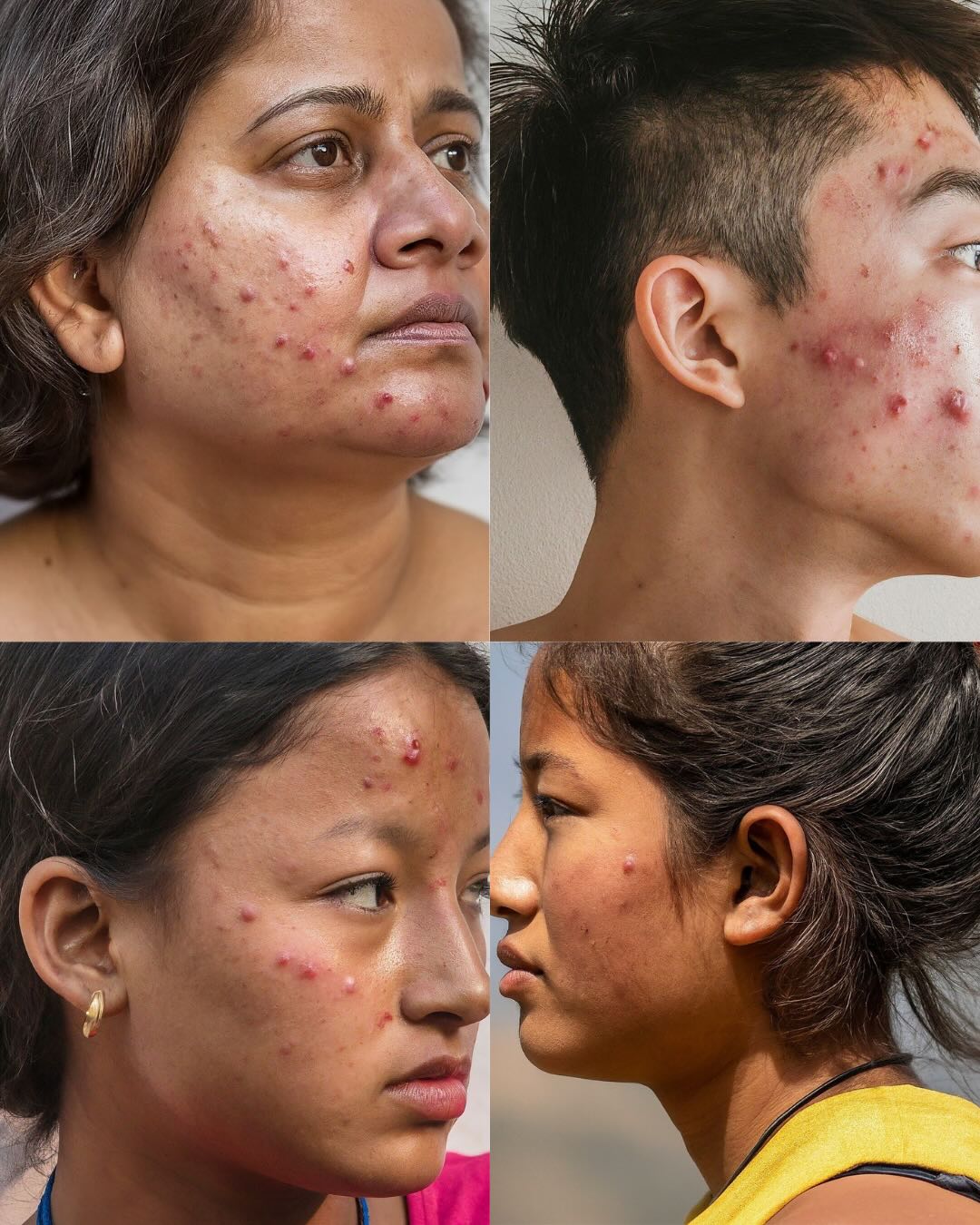
Acne is a persistent and complex skin condition affecting many people across Nepal. Whether you are dealing with early signs requiring teen acne treatment, or struggling with persistent adult breakouts near Basundhara, Maharajgunj, or Baneshwor, battling recurrent lesions requires proper dermatological attention. Finding the right skin doctor for acne can make all the difference in managing this chronic condition.
While often brushed off as a temporary phase, acne is an active inflammatory skin disease requiring targeted medical care. As a premier acne clinic in Kathmandu, Derma Clinic focuses on evidence-based dermatological care to address the root biological triggers of acne, clear active lesions, and safely perform acne removal in Kathmandu to prevent long-term scars.
Meet Your Dermatologist: Dr. Utsav Sharma
Often recognized by patients as the best acne doctor in Kathmandu, Dr. Utsav Sharma is a Board-Certified Consultant Dermatologist and Venereologist practicing at Derma Clinic. As a leading acne specialist in Kathmandu, he specializes in creating personalized, science-backed treatment plans. His approach focuses on diagnosing the root causes of skin conditions—such as hormonal imbalances or barrier dysfunction—rather than relying on temporary cosmetic fixes. View his complete clinical profile.
Understanding Acne: More Than Just Pimples
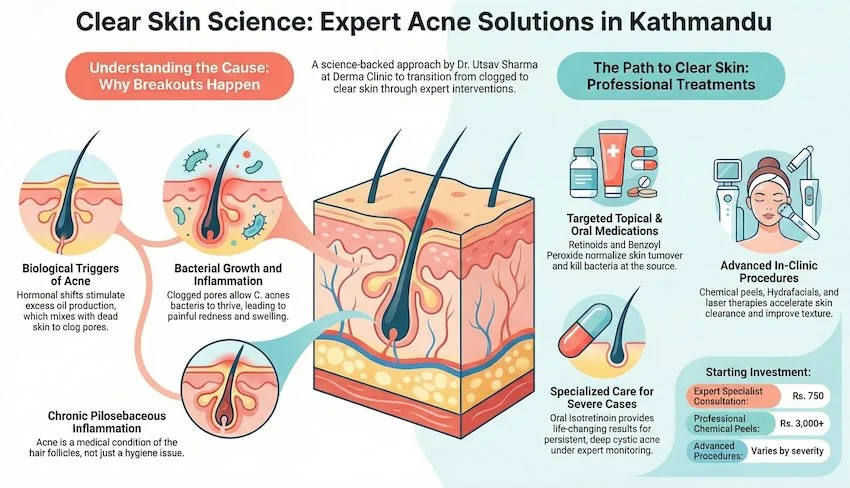
Acne vulgaris is a chronic inflammatory disorder of the pilosebaceous units—which consist of hair follicles and their connected sebaceous (oil) glands. According to the NHS and the Mayo Clinic, breakouts occur when four primary biological factors interact beneath the surface:
- Sebum Overproduction: Hormonal shifts trigger excess androgen activity, heavily contributing to hormonal acne in both adolescents and adults. This causes sebaceous glands to produce far more oil (sebum) than the skin needs. Recent studies confirm that female patients with persistent acne exhibit a significantly higher prevalence of underlying conditions, prompting many to explore treatments like PCOS-related therapy to manage associated symptoms.
- Follicular Plugging (Hyperkeratinization): Instead of shedding normally, dead skin cells stick together inside the pore, combining with excess oil to form a dense plug known as a comedone.
- Bacterial Proliferation: Cutibacterium acnes (C. acnes), a bacterium naturally present on the skin, thrives inside oxygen-starved, oil-clogged pores and multiplies rapidly.
- Inflammatory Response: Your immune system responds to bacterial overgrowth by sending white blood cells to the area. This causes the swelling, redness, and pus characteristic of inflamed papules, pustules, and deep cysts.
Clinical Classification: Types of Acne
Accurately identifying your specific acne type is the key to choosing an effective treatment path.
| Acne Type | Medical Name | Visual Appearance | Severity |
|---|---|---|---|
| Whiteheads | Closed Comedones | Small, raised, white/flesh-colored bumps under closed skin. | Mild |
| Blackheads | Open Comedones | Clogged pores open at surface; dark oxidized pigment. | Mild |
| Papules | Inflammatory Papules | Tender, small red bumps signaling early pore inflammation. | Moderate |
| Pustules | Inflammatory Pustules | Red, inflamed lesions topped with pus center. | Moderate |
| Nodules | Nodular Acne | Firm, painful, solid lumps deep under skin surface. | Severe |
| Cysts | Cystic Acne | Large, fluid-filled, painful deep lesions. Scar-prone. | Severe |
Understanding Acne Scars & Post-Acne Marks
Severe or untreated acne often leaves behind structural changes to the skin. Differentiating between true scarring and temporary marks is crucial before exploring acne scar treatments or treatments for pigmentation:
- Post-Inflammatory Hyperpigmentation (PIH) / Erythema (PIE): Flat dark or red acne marks left after healing. They are not structural scars and often fade with proper sun protection and topical actives.
- Ice-Pick Scars: Deep, narrow, V-shaped pits requiring specific interventions like TCA CROSS.
- Boxcar Scars: Broad, U-shaped depressions with sharp edges.
- Rolling Scars: Shallow depressions with sloping edges creating an uneven, wavy texture, often managed via microneedling.
Never attempt to pop or squeeze active acne at home. Squeezing can drive bacteria deeper, worsen inflammation, introduce infection, and significantly increase the risk of permanent scarring. Professional comedone extraction should only be performed using sterile instruments in a clinical setting.
Factors That Induce or Exacerbate Acne
- Hormonal Fluctuations: Androgen spikes stimulate oil glands, a primary driver behind teenage acne and cyclical adult acne treatment protocols.
- Stress & Cortisol: High psychological stress raises cortisol levels, which directly binds to receptors in the sebaceous glands, ordering them to pump out more oil.
- Friction and Pressure (Acne Mechanica): Helmets, mask straps, or frequent face touching physically trap sweat, heat, and bacteria against the skin.
The Impact of Sleep: Timing and Circadian Rhythms
Sleep deprivation is a massive, often overlooked trigger for acne. When you lack sleep, the body remains in a state of stress, keeping cortisol levels elevated. This triggers systemic inflammation and excess sebum production.
Does sleeping late and waking up late compensate? Generally, no. Your skin operates on a biological clock known as the circadian rhythm. During the deep hours of the night (typically between 10 PM and 2 AM), the skin goes into its peak repair and regeneration phase, heavily relying on the natural release of melatonin (which also acts as a powerful skin antioxidant). Sleeping late and shifting your hours disrupts this natural cycle. Even if you sleep 8 hours starting at 3 AM, you miss the optimal biological window for barrier repair, leading to slower healing of active pimples and a duller complexion.
Cosmetics & Makeup (Acne Cosmetica)
Acne Cosmetica is a specific type of acne caused entirely by comedogenic (pore-clogging) makeup and heavy skincare products. It typically presents as hundreds of tiny, flesh-colored bumps (closed comedones) on the cheeks, chin, and forehead.
- What to look for: Always check labels for the terms “Non-comedogenic,” “Oil-Free,” and “Safe for acne-prone skin.” Mineral-based makeup is generally safer.
- Ingredients to avoid: Heavy silicones (excessive dimethicone), Isopropyl Myristate, Algae extract, Coconut Oil, and Cocoa butter. These ingredients form an occlusive film that traps dead skin cells inside the pore.
- The importance of cleansing: Long-wear makeup and water-resistant sunscreens cannot be removed with water or regular face wash alone. If you wear makeup, a nightly “double cleanse” (using a gentle cleansing balm or micellar water first, followed by a regular water-based cleanser) is mandatory to prevent pore blockages.
Dietary Considerations: What the Science Says
While diet does not cause acne in isolation, research indicates certain components can trigger breakouts in susceptible individuals. High-glycemic foods spike insulin and IGF-1, signaling glands to produce more oil. Furthermore, whey protein supplements elevate insulin and IGF-1, which observational studies suggest may contribute to acne development in some patients.
For complete dietary guidance, explore our detailed review on foods that may cause acne.
Ready for Clear Skin?
Get a personalized, science-backed treatment plan tailored to your specific skin type.
Book Consultation at Derma ClinicOver-the-Counter & Prescription Serums for Acne
1. Salicylic Acid (BHA) Serum
- Percentage Used: Typically 1% to 2% in serums and toners. This specific range is highly effective at dissolving sebum deep inside the pore without causing severe chemical burns or excessive peeling.
- How it Works: It is an oil-soluble acid, meaning it can bypass surface oil to exfoliate dead cells trapped inside the hair follicle.
- Best Combinations: Pairs beautifully with Niacinamide or Hyaluronic Acid. Warning: Do not layer it on the same night as Retinoids or Benzoyl Peroxide, as the combined exfoliation will destroy your skin barrier.
2. Azelaic Acid Serum
- Percentage Used: 10% in Over-The-Counter (OTC) cosmetics, and 15% to 20% in clinical prescriptions. 10% is excellent for mild redness and PIH, while 15-20% is required to effectively kill acne bacteria and treat inflammatory rosacea.
- How it Works: Reduces acne-causing bacteria, calms inflammation, and inhibits the enzyme (tyrosinase) that causes dark post-acne marks.
- Best Combinations: Highly versatile. Can be paired with Vitamin C in the morning for brightening, or layered with Niacinamide to target stubborn pigmentation.
3. Niacinamide (Vitamin B3) + Zinc PCA Serum
- Percentage Used: 5% to 10%. While 2-5% is sufficient for basic barrier repair, clinicians frequently prescribe and recommend 10% formulations for patients with extremely oily, resilient skin because it offers robust sebum control and aggressively targets dark acne marks.
- How it Works: Regulates oil gland activity, reduces visible pore size, and dramatically strengthens the skin’s lipid barrier. Zinc PCA adds a targeted antibacterial element.
- Best Combinations: The ultimate “buffer” ingredient. Applying Niacinamide before strong prescription Retinoids helps protect the skin barrier and reduces the redness and peeling associated with retinoid use. It also pairs perfectly with Salicylic Acid.
Selecting the Right Sunscreen and Moisturizer
Why Sunscreen is Non-Negotiable for Acne
Many patients with oily skin skip sunscreen because they fear it will clog their pores. However, UV rays actually trigger inflammation and cause post-acne marks (hyperpigmentation) to become permanently darker. Furthermore, clinical acne treatments like Retinoids, AHAs, and Benzoyl Peroxide thin the dead layer of skin, making it highly sensitive to sunburn.
- What to look for: Labels that say “Non-comedogenic” (won’t clog pores) and “Oil-free”. Zinc Oxide and Titanium Dioxide are excellent mineral filters that can actually soothe inflamed skin. Sunscreens with added Niacinamide provide extra oil control.
- What to avoid: Heavy oils like coconut oil, rich butters, and thick silicones (if you are sensitive to them). Avoid comedogenic ingredients like Isopropyl Myristate.
- Gel vs. Aquagel:
Gel Sunscreens have a dry, matte finish that absorbs excess oil, making them ideal for highly active, very oily skin in hot and humid Kathmandu weather.
Aquagel (Water-gel) Sunscreens provide a hydrating, water-burst finish. These are perfect if your acne medicines are making your skin peel or feel dehydrated, as they offer moisture without the heavy grease of a cream.
The Crucial Role of Moisturizer
A common myth is that oily, acne-prone skin does not need moisturizer. When you strip your skin of its natural oils using harsh cleansers or strong acne creams, your skin’s barrier breaks down. In panic, your sebaceous glands produce even more oil to compensate, leading to a vicious cycle of oiliness and breakouts. Moisturizing stops this cycle and repairs the damaged barrier.
- What to buy: Lightweight lotions or gel-creams containing Hyaluronic Acid, Glycerin, and Ceramides to restore the skin barrier.
- What to avoid: Thick, heavy occlusives like large amounts of petrolatum, beeswax, shea butter, or heavy facial oils, which trap dead skin and bacteria inside the pore.
Simple Acne Routine: Morning and Night
Building a consistent routine is foundational. Note: Patients on prescription treatments should follow their dermatologist’s specific directions rather than copying a generic routine.
| Time | Recommended Daily Framework |
|---|---|
| Morning | Gentle cleanser ➔ Azelaic Acid / Vitamin C Serum ➔ Spot Treatment ➔ Non-comedogenic Moisturizer ➔ Broad-Spectrum SPF 30+ (Gel or Aquagel) |
| Night | Gentle Double Cleanse ➔ Niacinamide Serum (Buffer) ➔ Prescribed Retinoid OR Salicylic Acid (alternate nights) ➔ Barrier Repair Moisturizer |
Comprehensive Medical Treatments
Topical Actives: Retinoid vs. Benzoyl Peroxide
| Feature | Topical Retinoids (e.g., Adapalene, Tretinoin) | Benzoyl Peroxide (BPO) |
|---|---|---|
| Action | Normalizes cell turnover to prevent pore clogging. | Introduces oxygen to the pore to kill C. acnes bacteria. |
| Usage | Apply at night; increases sun sensitivity. | Can be used AM or PM; bleaches fabrics. |
| Target | Long-term prevention of comedones and lesions. | Rapid reduction of active inflammatory pimples. |
1. Topical Prescription Creams
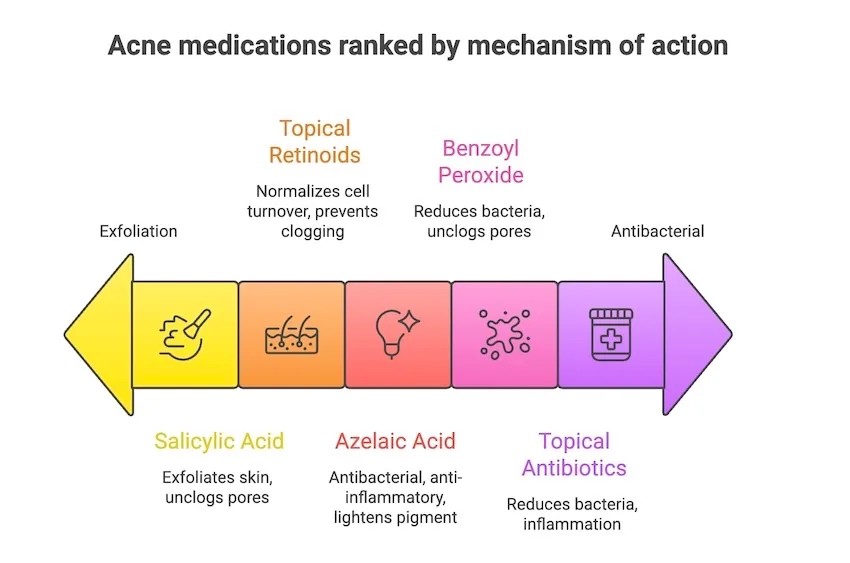
- Topical Retinoids (Tretinoin, Adapalene): Normalizes cell turnover to prevent pore clogging. Apply only a pea-sized amount for the entire face at night. Sunscreen is mandatory during the day to protect fresh skin layers.
- Benzoyl Peroxide (BPO): Releases oxygen into pores to manage bacteria. Note: It will bleach fabrics. Wash your hands thoroughly after application to avoid transferring residue to towels or clothing, and let it dry fully before dressing.
- Topical Antibiotics (Clindamycin 1%): A highly effective anti-inflammatory and antibacterial agent used for red, swollen papules and pustules. Crucial Clinical Rule: Clindamycin should never be used alone (monotherapy) for acne because the bacteria will rapidly develop antibiotic resistance. It must always be paired with Benzoyl Peroxide.
- Adapalene + Clindamycin Gels (e.g., Deriva CMS): A very common and highly effective prescription combination in Nepal. The Adapalene unclogs the pore, allowing the Clindamycin to penetrate deeply and kill the bacteria simultaneously.
2. In-Depth Oral Medications (Systemic Therapy)
When topical treatments are not enough, systemic medications travel through the body to tackle acne at a deeper, biological level. These require close dermatologist supervision.
A. Oral Antibiotics (Doxycycline, Azithromycin, Minocycline)
- How they work: They quickly reduce the population of C. acnes bacteria and act as powerful systemic anti-inflammatories.
- Dose & Routine: Typical dosing for Doxycycline is 50mg to 100mg taken once or twice daily, usually for a strict course of 6 to 12 weeks.
- Precautions & Side Effects: Doxycycline can cause severe photosensitivity (making you sunburn easily) and stomach upset. It must be taken with a full glass of water, and patients must remain upright for 30 to 45 minutes to prevent esophageal irritation/ulcers. Do not take it with milk or calcium supplements, as calcium binds to the drug and blocks absorption.
B. Oral Isotretinoin
- How it works: A highly potent Vitamin A derivative that physically shrinks the oil glands, reducing oil production so drastically that acne bacteria cannot survive. It is the closest thing to a permanent “cure” for severe, nodulocystic acne.
- Dose & Routine: Dosing is highly customized based on your body weight, typically ranging from 0.5 to 1.0 mg per kg of body weight per day. Dermatologists aim for a “cumulative total dose” reached over a period of 4 to 8 months of daily use. It is best taken with a fatty meal to ensure proper absorption.
- Precautions & Side Effects: Expect extreme dryness of the lips, eyes, and skin. It can occasionally cause joint pain or mood changes. Crucially, it is highly teratogenic, meaning it causes severe birth defects. Strict pregnancy prevention is mandatory.
- Blood Tests Required: Patients must complete baseline and periodic blood tests to monitor Liver Function Tests (LFT) and Fasting Lipid Profiles (cholesterol and triglycerides), as the drug is heavily processed through the liver.
C. Hormonal Therapies (Spironolactone & OCPs)
- How they work: Spironolactone blocks androgens (male hormones like testosterone) from binding to the skin’s oil glands, making it incredibly effective for adult female hormonal acne occurring on the jawline and chin. Specific Oral Contraceptive Pills (OCPs) can also balance estrogen and progesterone.
- Dose & Routine: Spironolactone is usually prescribed at 25mg to 100mg daily. It takes patience; maximum clinical effects are usually seen after 3 to 4 months of consistent daily use.
- Precautions & Side Effects: Spironolactone is a diuretic, so it may increase urination. It can also cause breast tenderness or irregular menstrual cycles.
- Blood Tests Required: Because Spironolactone can cause the body to retain potassium, dermatologists may occasionally check kidney function and potassium levels, especially in older patients.
D. Specialized Oral Medications
- Oral Steroids (Prednisolone): Never used as a long-term acne treatment. Short-course oral steroids are prescribed for only a few weeks to quickly calm down Acne Fulminans (a sudden, severe, ulcerating form of acne) or to prevent the severe initial “purging” flare-up that sometimes happens when a patient starts Isotretinoin. Blood pressure and blood sugar must be monitored.
- Oral Antihistamines (Levocetirizine, Fexofenadine): Sometimes prescribed if the acne is highly inflammatory, painfully itchy, or accompanied by an allergic/histamine response. They reduce itching, which prevents scratching and secondary infections.
- Oral Dapsone: While topical Dapsone 5% is a standard gel, Oral Dapsone is a rare, heavy-duty medication reserved for extremely severe, treatment-resistant acne. Before starting, a strict blood test checking for the G6PD enzyme must be done, as missing this enzyme while taking Dapsone can cause severe hemolytic anemia. Regular Complete Blood Counts (CBC) are monitored.
In South Asia, there is a common myth that acne is caused by “stomach heat” or gastritis, leading some to take antacids like Aciloc (Ranitidine) to clear their skin. Scientifically, Ranitidine is an H2 blocker designed to lower stomach acid and has no proven role in directly treating acne vulgaris. Dermatologists only prescribe antacids alongside acne treatment if a patient develops severe gastric irritation from taking harsh oral antibiotics like Doxycycline on an empty stomach.
Modern Innovations in Acne Care
- Clascoterone 1% Cream: A first-in-class topical androgen receptor inhibitor. Unlike oral hormonal pills which carry systemic effects, Clascoterone targets dihydrotestosterone (DHT) directly at the skin’s oil gland to reduce sebum production. It can be used safely by both males and females aged 12 and older.
- Fixed-Dose Triple Combination Gels: Global dermatology is shifting toward powerful all-in-one treatments. FDA-approved products combine three active ingredients—clindamycin (antibiotic), adapalene (retinoid), and benzoyl peroxide (antiseptic)—into a single daily gel. While this specific triple combo is not yet widely available in Nepal, it represents a major leap forward globally, proving that combining ingredients in a stable formulation vastly improves patient adherence compared to layering multiple different creams at home.
- Pipeline Oral Antibiotics (Sarecycline): Sarecycline is a newer, narrow-spectrum oral antibiotic approved in Western markets. Unlike Doxycycline which wipes out broad groups of bacteria (often causing gut issues or yeast infections), Sarecycline specifically targets C. acnes while sparing the healthy bacteria in your gut. We are watching closely for its introduction to the South Asian market.
- Microbiome Barrier Care: Your skin is covered in millions of invisible, protective bacteria—this is your “skin microbiome.” Older acne treatments used to act like a nuclear bomb, killing all bacteria and leaving the skin angry, red, and prone to new infections. Modern formulations are much smarter. They use prebiotics and postbiotics to feed the good bacteria while only targeting the bad acne-causing bacteria. This keeps your skin barrier strong, preventing that tight, burning feeling during treatment and promoting long-term skin health.
Clinical Procedures & Technologies
A 24-year-old male patient presented with Grade III inflammatory and comedonal acne. A combination of customized topical retinoids and 3 sessions of Salicylic Acid peels achieved a significant reduction in active lesions in 10 weeks.
A 28-year-old female patient presented with cystic jawline acne. Combination therapy using oral Spironolactone and topical Azelaic acid achieved improvement in active lesions and post-acne marks within four months.
*Illustrative anonymized cases. Individual results, treatment duration, and suitability vary after dermatologist assessment.
Comparing In-Clinic Options: Chemical Peel vs. Laser Therapy
| Feature | Chemical Peels | Laser Therapy |
|---|---|---|
| Primary Mechanism | Chemical exfoliation to remove dead cells and unclog pores. | Light energy targets bacteria or stimulates collagen production. |
| Best For | Active acne, comedones, and superficial acne marks (PIH). | Deep structural acne scars and persistent redness. |
| Downtime | 1–5 days of mild to moderate flaking. | 3–7 days of redness or swelling, depending on the laser type. |
- TCA CROSS: High-concentration Trichloracetic Acid applied precisely inside deep ice-pick scars to trigger collagen elevation from the bottom up.
- Hydrafacial: Medical-grade vortex-cleansing and serum infusion to safely extract impurities and hydrate compromised skin barriers.
Frequently Asked Questions (FAQ)
What are the primary treatments for acne in Nepal?
Treatment is determined by the clinical grade of your acne. Mild to moderate breakouts are typically managed with topical retinoids and benzoyl peroxide, whereas severe nodulocystic acne may require oral therapies like Isotretinoin or supervised in-clinic procedures.
Who can I consult for acne treatment in Kathmandu?
Dr. Utsav Sharma (NMC: 7619) is a Board-Certified Consultant Dermatologist at Derma Clinic in Kathmandu, specializing in diagnosing the root causes of skin conditions and developing evidence-based medical treatment plans.
How much does acne treatment cost in Nepal?
Medical costs vary based on the required interventions. Initial consultations at Derma Clinic are Rs. 750, and specialized procedural treatments such as Chemical Peels begin at Rs. 3,500.
How long do prescription acne treatments take to show results?
Because normal skin cell turnover takes several weeks, most topical and oral prescription treatments require 8 to 12 weeks of consistent application before clinical improvements are noticeable.
Is oral isotretinoin safe to use?
Oral Isotretinoin is a highly effective medication for severe acne, but it requires strict medical supervision. Patients must undergo regular blood tests to monitor liver function and lipid panels, and females must adhere to stringent pregnancy prevention protocols.
Are acne treatments safe during pregnancy or breastfeeding?
Pregnant or breastfeeding patients must consult a dermatologist and obstetrician before starting any acne medication. Several common treatments, notably oral Isotretinoin and topical retinoids, are strictly contraindicated during pregnancy due to the high risk of fetal harm.
Are chemical peels suitable during active breakouts?
Certain clinical peels, particularly Salicylic Acid (BHA) peels, are formulated to penetrate oil-filled pores and dissolve comedones, making them a common adjunctive procedure for managing active, inflammatory acne.
Can I combine salicylic acid, benzoyl peroxide, and tretinoin?
Combining multiple strong active ingredients simultaneously can compromise the epidermal barrier, leading to irritation and paradoxical oil production. Dermatologists usually recommend spacing these out—for example, using a Salicylic Acid wash in the morning and a retinoid at night.
Is microneedling safe to perform over active pimples?
No. Microneedling should not be performed over active, inflamed lesions, as the needles can transfer bacteria and worsen the infection. Active acne must be stabilized medically before initiating scar remodeling procedures like microneedling.
When is it necessary to seek professional dermatological care?
A dermatological assessment is recommended if you develop deep, painful cystic nodules, notice early signs of physical scarring, or experience no improvement after 8 to 12 weeks of consistent over-the-counter care.
How can permanent acne scars be prevented?
The most reliable method to prevent acne scars is early medical intervention to control the inflammation. Patients are strongly advised against popping or extracting lesions at home, as this exacerbates tissue damage and heightens scarring risk.
What procedures are used to address existing acne scars?
Treatment modalities depend on the scar morphology. Options at Derma Clinic include TCA CROSS for narrow ice-pick scars, targeted Microneedling for rolling texture anomalies, and specific laser therapies designed to stimulate subsurface collagen production.
How is hormonal acne treated differently in women?
Adult female hormonal acne is frequently linked to heightened androgen sensitivity. Dermatologists may prescribe systemic options such as Spironolactone or specific Oral Contraceptive Pills (OCPs) alongside topical therapies to regulate hormonal influence on sebaceous glands.
Take Control of Your Skin’s Health
Navigating the emotional and physical toll of persistent breakouts can be deeply frustrating, but you do not have to struggle alone. Widely recognized as the best clinic in Nepal for comprehensive acne treatment, Derma Clinic is fully equipped to handle everything from stubborn teenage acne to complex adult hormonal acne. Our dedicated medical team is committed to providing compassionate, science-backed solutions that target the root cause of your condition. Take the first step toward reclaiming your confidence—reach out to our expert team today, and let us help you reveal the clear, healthy skin you deserve.
Book Your Dermatologist Consultation Today
Expert dermatological care is just a message away.
Consultation Hotline: 9801358600
WhatsApp Us: Chat on WhatsApp
Address: 4th Floor, Bishal Bhawan, Basundhara Chowki, Kathmandu, Nepal
Scientific References & Medical Resources
- American Academy of Dermatology (AAD): Guidelines of care for the management of acne vulgaris (2024 Updates).
- National Institute for Health and Care Excellence (NICE): Acne vulgaris: management guidelines.
- National Health Service (NHS): Acne – Causes, Symptoms, and Treatments.
- Mayo Clinic: Acne – Symptoms and causes.
Useful Patient Links
Article Author: Dr. Utsav Sharma
Source Publication: https://dermaclinic.com.np/acne-treatment/