
NMC Registration Number: 7619
Last Medically Reviewed: August 12, 2026

Consultant Dermatologist & Venereologist | 15+ Years Clinical Experience
Derma Clinic provides non-surgical vitiligo treatment in Kathmandu, Nepal. While the facility is based in the heart of the city, the clinic proudly serves a diverse, global patient demographic, delivering evidence-based dermatological care to help manage disease activity and restore natural skin pigment.
A vitiligo diagnosis does not mean patients must passively accept the spread of white patches. Many individuals can achieve meaningful disease control or repigmentation, although response varies by treatment type, disease activity, and the specific areas of the body involved. Under the clinical guidance of Dr. Utsav Sharma, the clinical focus is on controlling the autoimmune activity associated with vitiligo and promoting repigmentation where appropriate, without resorting to surgical skin grafting unless strictly necessary.
What Is Vitiligo?
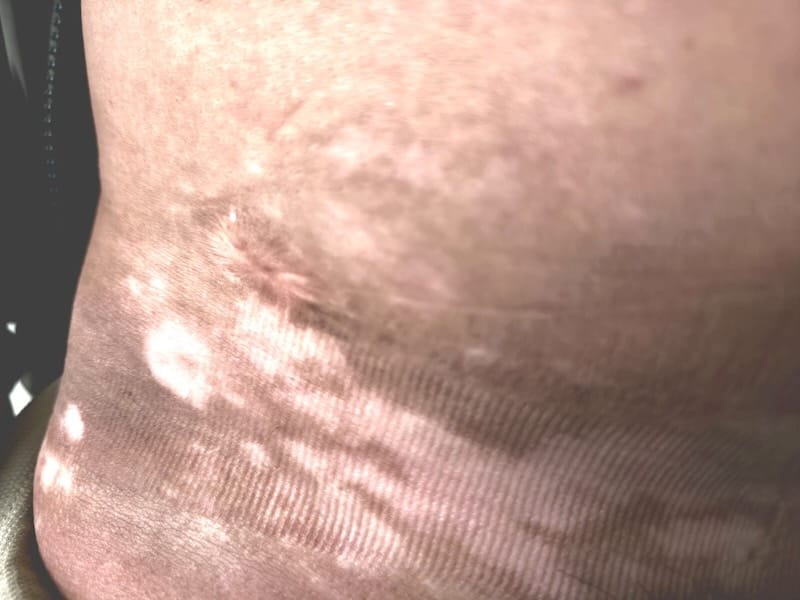
Vitiligo is an autoimmune skin condition characterized by the loss of pigment-producing cells known as melanocytes. When these cells are destroyed or stop functioning, smooth white patches develop on the skin. It affects people of all skin types and ages worldwide.
Key Clinical Facts:
- Vitiligo is an autoimmune condition and is not contagious: It cannot be transmitted through physical contact.
- The psychological impact is significant: Although it is usually not physically painful, vitiligo can have a profound emotional and psychological impact on a patient’s quality of life.
- Disease behavior varies widely: Vitiligo can remain stable in some people, while in others new patches develop or existing patches expand. Understanding whether the disease is stable (no new patches) or active (spreading) is crucial for determining the correct treatment approach.
What Causes Vitiligo?
In an autoimmune response, the body’s immune system misidentifies its own healthy melanocytes as foreign threats and attacks them. Several contributing factors are recognized in dermatological research:
- Genetics: Research indicates a genetic component, with some patients reporting a family history of the condition.
- Autoimmune Links: Patients with vitiligo have a statistically higher likelihood of having other autoimmune disorders, particularly thyroid conditions like Hashimoto’s thyroiditis.
- External Triggers: Physical skin trauma (such as cuts or friction, known clinically as the Koebner phenomenon) or severe sunburns can trigger the onset or exacerbate the spread of patches. Stress may contribute to disease activity or worsening in some people with vitiligo, although it is not the sole cause of the condition.
Types of Vitiligo
International management recommendations base treatment selection on the specific subtype and presentation of the disease:
- Nonsegmental Vitiligo: The most common type. It is usually bilateral and symmetrical (appearing on both sides of the body) and may progressively involve multiple areas over time.
- Segmental Vitiligo: Often affects only one side or segment of the body. It typically progresses for a short period and then stabilizes.
- Acral Vitiligo: Involves the hands, fingers, and feet. Because these areas lack dense hair follicles, they can be more resistant to repigmentation.
- Mucosal Vitiligo: Involves the lips or genital mucosa and requires specialized dermatological assessment.
How Is Vitiligo Diagnosed?
A dermatologist diagnoses vitiligo clinically through a comprehensive evaluation process:
- Clinical Examination & Medical History: An assessment of the patches, disease activity, body surface area involved, and family history.
- Wood’s Lamp Examination: A Wood’s lamp can help highlight areas of depigmentation and assist the dermatologist in distinguishing vitiligo from some other causes of hypopigmentation.
- Differential Diagnosis: Ensuring the white patches are not caused by other conditions like pityriasis alba or tinea versicolor.
Are Blood Tests Needed for Vitiligo?
Blood tests are not required for every person with vitiligo. Depending on your medical history, symptoms, examination, and planned treatment, a dermatologist may recommend tests to evaluate associated autoimmune conditions or check treatment safety.
| Test Category | Tests That May Be Considered | Clinical Purpose |
|---|---|---|
| Thyroid Function | Thyroid Profile (TSH) & Anti-TPO | Screening for thyroid dysfunction or antibodies when clinically appropriate. |
| General Health & Nutrition | CBC, Vitamin B12, Vitamin D | Vitamin B12 and vitamin D levels may be assessed when clinically indicated, particularly when deficiency is suspected. Correcting a documented deficiency is important for general health, but supplementation should not be presented as a proven standalone treatment for vitiligo. |
| Systemic Treatment Safety | Glucose, LFT (Liver), RFT (Kidney) | These tests may be used to assess general health and treatment safety before certain systemic medications are prescribed. |
How Do We Monitor Treatment Progress?
Proper disease monitoring is essential for evaluating the success of a treatment plan. International recommendations support:
- Baseline Clinical Photography: Taking standardized photos before treatment begins.
- Periodic Reassessment: Monitoring repigmentation progress and disease activity at regular intervals.
- Treatment Adjustment: Modifying the protocol based on how specific anatomical lesions respond over time.
Vitiligo Treatment Options
Treatment selection depends on subtype, disease activity, extent, and individual treatment goals. [1] Non-surgical management is typically the starting point.
Topical Corticosteroids
For early-stage or localized vitiligo, prescription topical steroids are frequently used to suppress localized immune activity. They are prescribed under strict medical supervision for limited durations to prevent skin thinning.
Tacrolimus and Pimecrolimus
Topical calcineurin inhibitors like topical tacrolimus provide an evidence-based, steroid-free option. They safely modulate the localized immune response and are highly preferred for sensitive areas like the face, eyelids, neck, and for pediatric patients.
Topical Ruxolitinib Cream
A major modern advancement in vitiligo management is the use of topical Janus kinase (JAK) inhibitors. Ruxolitinib 1.5% cream (Opzelura) has received FDA approval for the treatment of nonsegmental vitiligo in adults and pediatric patients 12 years and older. [3]
- How It Works: It targets and blocks the specific IFN-γ/CXCL10 immune pathway involved in melanocyte destruction.
- Eligibility: Its approved indication and body-surface-area limitations vary by regulatory jurisdiction. A dermatologist can determine whether it is appropriate for an individual patient.
NB-UVB Phototherapy
Narrowband UVB (NB-UVB) is one of the main evidence-based phototherapy treatments for vitiligo and is commonly recommended for widespread or rapidly progressive disease. Utilizing a therapeutic 311-312 nm wavelength, it helps suppress the localized immune attack while stimulating melanocyte stem cells. NB-UVB can be used in children when clinically appropriate and under dermatologist supervision, with treatment settings carefully adjusted for age and skin type.
Systemic Treatment for Rapidly Progressive Vitiligo
For unstable, rapidly spreading vitiligo, systemic corticosteroids (such as Oral Mini-Pulse therapy) may help slow or stabilize rapidly progressive vitiligo when prescribed and strictly monitored by a dermatologist. Systemic treatments are not appropriate for everyone and potential adverse effects must be medically managed.
Surgical Repigmentation
Surgical repigmentation may be considered for carefully selected patients with stable vitiligo, particularly when medical treatment has not produced adequate repigmentation. This is particularly relevant for segmental vitiligo or localized lesions that have failed to respond to topical or phototherapy regimens.
Vitiligo Treatment for Children
Children can receive vitiligo treatment when clinically appropriate and under specialist supervision. Treatment typically prioritizes steroid-free topicals like calcineurin inhibitors. If phototherapy is required, NB-UVB is administered using modified, age-appropriate dosage protocols to ensure safety.
How Long Does Vitiligo Treatment Take?
Response to treatment varies considerably by disease activity, subtype, body site, extent, and duration. Facial vitiligo generally responds better and faster than acral areas such as fingers and toes.
- Disease Stabilization: Stabilization may become apparent over the first several months, depending on disease activity and treatment.
- Visible Repigmentation: Visible repigmentation may take several months and varies considerably by treatment and body site.
- Maximum Response: Meaningful repigmentation may require 6–12 months or longer of consistent treatment.
Frequently Asked Questions About Vitiligo
Is vitiligo curable?
There is currently no permanent genetic cure for vitiligo. However, it is highly treatable. With consistent, evidence-based dermatological care, disease progression can be stabilized, and meaningful skin repigmentation can often be achieved.
What is the best treatment for vitiligo?
There is no single “best” treatment for everyone. The optimal approach depends on the subtype of vitiligo, whether the condition is active or stable, the body surface area involved, and patient age. A dermatologist selects from topicals, phototherapy, systemic treatments, or surgical options based on individual clinical evaluation.
How long does vitiligo treatment take?
Stabilization may become apparent over the first few months of care. Visible repigmentation generally takes several months of consistent treatment, while achieving maximum response often requires 6 to 12 months or longer.
Does NB-UVB work for vitiligo?
Yes. NB-UVB is heavily supported by international consensus guidelines as an effective treatment, particularly for widespread or active disease. Response varies by location, with facial vitiligo showing higher rates of repigmentation compared to the hands and feet.
What blood tests are needed for vitiligo?
Blood tests are not universally required for every patient. Depending on individual medical history and planned therapies, a dermatologist may order thyroid profiles, antibody screenings, vitamin levels (B12/D), or baseline blood sugar and organ function tests prior to starting systemic medications.
Can children receive vitiligo treatment?
Children can receive vitiligo treatment when clinically appropriate and under specialist supervision. Pediatric vitiligo is managed using pediatric-specific protocols, primarily utilizing steroid-free topical immunomodulators and carefully calibrated phototherapy when indicated.
When is surgery considered for vitiligo?
Surgical repigmentation is considered for carefully selected patients with stable vitiligo (typically no new or expanding patches for at least 12 months) whose lesions have not achieved adequate repigmentation with non-surgical medical or phototherapy treatments.
Can stress worsen vitiligo?
Stress may contribute to disease activity or worsening in some people with vitiligo, although it is not the sole cause of the condition.
Does diet cause vitiligo?
No. There is no clinical evidence that specific foods cause vitiligo. A balanced diet supports general health, but no specific diet has been proven to cure vitiligo. For a detailed breakdown, see our vitiligo diet guide.
Is vitiligo contagious?
Vitiligo is an autoimmune condition and is not contagious. It is impossible to catch it from or pass it to another person through touch or close contact.
Schedule Your Clinical Assessment
Early intervention with an experienced dermatologist offers the best opportunity for disease stabilization and repigmentation. Dr. Utsav Sharma provides evidence-based care informed by current international dermatology recommendations.
Message on WhatsApp Book Appointment Online
📍 Derma Clinic: 4th Floor Bishal Bhawan, Basundhara Chowki, Kathmandu
📞 Direct Line: 9801358600
Medical References
- Seneschal, J., et al. (2021). International consensus on the management of vitiligo: An algorithm-based approach. Journal of the European Academy of Dermatology and Venereology.
- Bae, J. M., et al. (2017). Phototherapy for Vitiligo: A Systematic Review and Meta-analysis. JAMA Dermatology, 153(7), 666-674.
- U.S. Food and Drug Administration (FDA). (2022). FDA approves topical treatment for nonsegmental vitiligo (Ruxolitinib 1.5% cream).
- Rosmarin, D., Passeron, T., et al. (2022). Two Phase 3 Trials of Topical Ruxolitinib Cream for Vitiligo. The New England Journal of Medicine, 387(16), 1445-1455.