
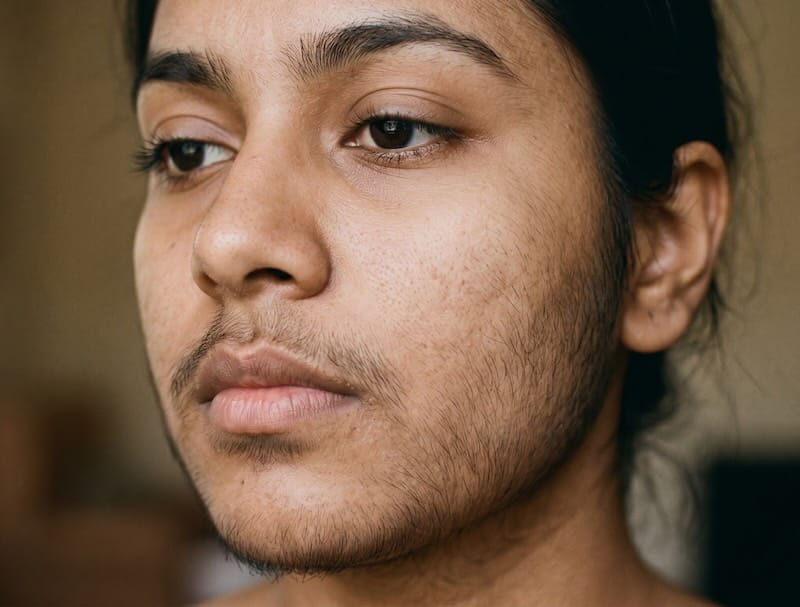
Paradoxical Hypertrichosis After Laser Hair Removal: Causes and Prevention
Laser hair removal is one of the most effective long-term hair reduction treatments available. For the vast majority of people, it delivers smoother skin, slower regrowth, and freedom from shaving or waxing. However, in rare cases, the treatment can lead to the exact opposite of what was intended: instead of reducing hair, it stimulates new or thicker hair growth.
This uncommon condition is known as paradoxical hypertrichosis. It refers to increased hair growth in or immediately surrounding the treated area after laser or intense pulsed light (IPL) treatment. The new hair often becomes darker, thicker, and more visible. While uncommon, understanding this side effect is critical for anyone considering laser hair removal, especially when treating the face, neck, or hormonally sensitive areas.
If you are researching laser hair reduction, knowing the risk factors, underlying causes, and correct prevention strategies will help you make an informed and safe decision.
What Is Paradoxical Hypertrichosis?
Paradoxical hypertrichosis is a rare adverse effect of laser or IPL treatments where hair growth increases rather than decreases. The new hair can appear directly in the treated zone or along its borders.
In scientific terms, laser energy that is meant to destroy the hair follicle instead acts as a stimulant. Fine, unpigmented vellus hair (peach fuzz) may transition into coarse, visible terminal hair. Dormant follicles can also be triggered into an active growth phase. The condition is called “paradoxical” precisely because it yields the opposite result of the intended procedure.
This phenomenon does not mean laser hair removal is inherently unsafe. Rather, it highlights the absolute necessity of strict patient selection, accurate machine settings, and choosing the correct wavelength for specific skin types.
How Common Is It?
Paradoxical hypertrichosis is relatively rare, though well-documented in dermatological literature. Clinical studies report an incidence range from 0.6 percent to 10 percent, heavily dependent on the area being treated, the technology used, and the patient’s skin type. A widely accepted pooled estimate places the overall prevalence at approximately 3 percent.
The risk is significantly concentrated in the facial and neck regions. For body areas below the neck, the risk drops drastically. In clinical practice, this means the condition is uncommon but requires careful preventative measures.
Why Does It Happen?
While the exact biological mechanism is still being studied, the most widely accepted cause is suboptimal heating. This occurs when the hair follicle receives insufficient thermal energy to be destroyed, but just enough to be stimulated.
If the laser fluence (energy) is set too low, the follicle survives the procedure. The mild thermal shock triggers a localized inflammatory response, which can encourage surrounding hair follicles to enter the active growth phase (anagen phase). This results in stronger, darker regrowth.
Primary factors contributing to this include:
- Using laser settings that are too weak
- Selecting a device unsuitable for the patient’s skin type
- Treating fine vellus hair instead of thick terminal hair
- Underlying hormonal imbalances
- Treating areas with a high density of dormant follicles
Who Is at Higher Risk?
The risk of developing paradoxical hypertrichosis is not distributed equally. Certain individuals and specific treatment zones are far more susceptible. Key risk factors include:
- Treatment Area: The face and neck are the most vulnerable regions due to the mixture of fine and thick hairs and their sensitivity to hormonal shifts.
- Skin Type: Individuals with darker skin tones (Fitzpatrick types III to VI) are at a higher risk if an inexperienced practitioner lowers the laser energy excessively to avoid skin burns.
- Hair Type: Treating fine, light hair is a major trigger.
- Medical Background: Patients with underlying hormonal disorders.
Male vs Female: Who Experiences It More?
Paradoxical hypertrichosis is documented much more frequently in women than in men. The vast majority of published clinical cases involve female patients undergoing laser treatment on the lower face, chin, jawline, upper lip, or neck. These areas are deeply linked to hormonal hair growth patterns.
For women, the condition is frequently associated with idiopathic hirsutism or conditions like Polycystic Ovary Syndrome.
Men can also develop paradoxical hypertrichosis, though it is reported less often. When it does occur in male patients, it is typically seen on the back, shoulders, or upper arms—areas where dense terminal hair mixes with finer hair.
Skin Type and Nepali Patients
In Nepal, the predominant skin types fall between Fitzpatrick III and V. Darker skin contains a higher concentration of melanin in the epidermis, which can compete with the hair follicle for the laser’s energy.
If a practitioner lowers the laser settings too much to protect the skin surface, the follicle will not receive the thermal injury required for destruction. This under-treatment is a direct pathway to paradoxical hypertrichosis.
Laser hair removal is completely safe for Nepali skin when performed correctly. It requires a customized approach utilizing the correct wavelength, robust epidermal cooling systems, and precise clinical parameters.
Hormonal Conditions and Hair Growth
Hormones dictate hair growth patterns. Patients with a hormonal imbalance are significantly more susceptible to reactive facial hair growth, elevating the risk of laser-induced stimulation.
Medical conditions strongly linked with an increased risk include:
- Polycystic Ovary Syndrome (PCOS)
- Nonclassical Congenital Adrenal Hyperplasia (NCAH)
- Cushing Syndrome
- Idiopathic Hirsutism
For patients with these conditions, treating the hair without managing the underlying hormonal source can lead to repeated frustration. A comprehensive medical approach is required for long-term success.
Which Devices Are Most Often Involved?
Paradoxical hypertrichosis has been recorded after both IPL and laser treatments. However, dermatology literature shows a higher association with IPL devices and Alexandrite (755 nm) lasers, particularly when used on darker skin tones.
This does not render these devices obsolete; they are highly effective for the right candidates. The issue arises when the device and energy settings are mismatched with the patient’s skin type and hair thickness.
Diode Laser and Paradoxical Hypertrichosis
Diode lasers are incredibly popular due to their balance of effectiveness and patient comfort. While highly reliable, diode lasers are not immune to causing paradoxical hypertrichosis if used improperly. Like any system, if the energy is too low or applied to the wrong hair type, stimulation can occur.
For Nepali patients, a diode laser can be very safe when operated with proper clinical judgment, strong cooling mechanisms, and appropriate fluence.
How Can It Be Prevented?
Prevention relies entirely on the expertise of the clinic and the medical professionals designing the treatment plan. To reduce the risk of paradoxical hypertrichosis:
- Never treat fine hair: Laser should only be applied to dark, coarse, terminal hair.
- Use optimal energy: Weak settings stimulate hair; strong, appropriate settings destroy it.
- Utilize advanced cooling: Protecting the skin allows the safe use of effective energy levels.
- Screen for hormones: A thorough medical history helps identify high-risk patients.
- Avoid treating the unknown: Be highly conservative when treating the face and neck.
How Paradoxical Hypertrichosis is Managed?
If paradoxical hypertrichosis occurs, the clinical response is not to stop treatment, but to adjust it. Management protocols include:
- Increasing the laser fluence to lethal levels for the follicle.
- Switching to a deeper penetrating wavelength, such as the Nd:YAG laser.
- Ensuring absolutely no fine hair is targeted in future sessions.
- Treating any underlying hormonal imbalances medically.
When managed correctly by a dermatologist, the stimulated hair can be successfully reduced over subsequent sessions.
Frequently Asked Questions (FAQs):
Can laser hair removal actually cause more hair to grow?
Yes, in very rare cases. This uncommon condition is called paradoxical hypertrichosis. Instead of reducing hair, the laser treatment stimulates dormant follicles, leading to the growth of new, thicker, or darker hair in or around the treated area.
How common is paradoxical hypertrichosis?
It is quite rare. Clinical studies and dermatological data estimate that it affects roughly 1 to 3 percent of laser hair removal patients. The likelihood depends heavily on the area of the body being treated and the expertise of the practitioner.
Why does it happen?
The most common cause is suboptimal laser energy. If the laser settings are too low, the heat delivered is not strong enough to destroy the hair follicle. Instead, this mild thermal shock acts as a stimulant, triggering the follicle into an active growth phase and turning fine hair into thick, visible hair.
Which areas of the body are most at risk?
The face and neck are by far the most vulnerable regions. This includes the chin, jawline, upper lip, and sideburns. These areas naturally contain a mix of fine and thick hairs and are highly sensitive to hormonal changes. For body areas below the neck, the risk is incredibly low.
Who is most likely to experience this side effect?
Women treating facial hair are the most commonly affected group. Additionally, individuals with darker skin tones (Fitzpatrick types III to VI) are at a higher risk if an inexperienced technician uses weak laser settings out of fear of causing a burn. Patients with underlying hormonal imbalances, such as Polycystic Ovary Syndrome (PCOS), are also highly susceptible.
Should I stop treatment if I notice more hair growing?
No, stopping treatment usually leaves the stimulated hair in place. Dermatologists typically recommend continuing laser therapy, but with corrected, higher energy settings to effectively destroy the newly formed thick hairs. In many cases, switching to a deeper-penetrating laser, like the Nd:YAG, is the standard medical protocol to fix the issue.
How do I prevent paradoxical hypertrichosis?
Prevention comes down to the skill of your clinic. To avoid it, practitioners must never treat fine “peach fuzz,” must use the correct wavelength tailored to your specific skin type, and must apply adequate energy levels to ensure the follicle is completely destroyed rather than just warmed up. Always choose a medical-grade clinic with experienced dermatologists.
Is diode laser safe for South Asian skin?
Yes, a diode laser can be highly effective and safe for South Asian skin types when operated by a trained professional. However, precise settings and advanced cooling mechanisms are required to ensure the skin is protected while delivering enough energy to kill the hair follicle. For deeper pigmented skin, the Nd:YAG laser is often considered the safest gold standard.
Laser Hair Removal at Derma Clinic
At Derma Clinic, patient safety and clinical efficacy are our highest priorities. Led by consultant dermatologist Dr. Utsav Sharma, our laser hair removal protocols are strictly designed around medical science, skin type analysis, and comprehensive medical histories.
By utilizing advanced, medical-grade laser technology calibrated specifically for South Asian skin types, we ensure hair follicles are safely targeted with the precise energy required for permanent reduction. Derma Clinic offers the best laser hair removal in Nepal with the best results and no known cases of paradoxical hypertrichosis so far.
Our approach is personalized to your skin, hair, and medical background to ensure a safe, effective, and smooth result. Read more about our advanced technology and treatment process in our comprehensive guide to laser hair removal at Derma Clinic.
Ready to step away from waxing and shaving with complete peace of mind? Contact Derma Clinic today to schedule your expert laser hair consultation.
LASER HAIR REMOVAL PRICE AT DERMA CLINIC
About the Dermatologist
Dr. Utsav Sharma serves as the primary Consultant Dermatologist at Derma Clinic in Kathmandu. Known for his precision in medical and cosmetic dermatology, Dr. Sharma brings specialized expertise in advanced laser therapies and treating complex skin conditions. His clinical approach is grounded in rigorous safety protocols and a deep understanding of dermatological science, ensuring the highest standard of patient care in Nepal.