
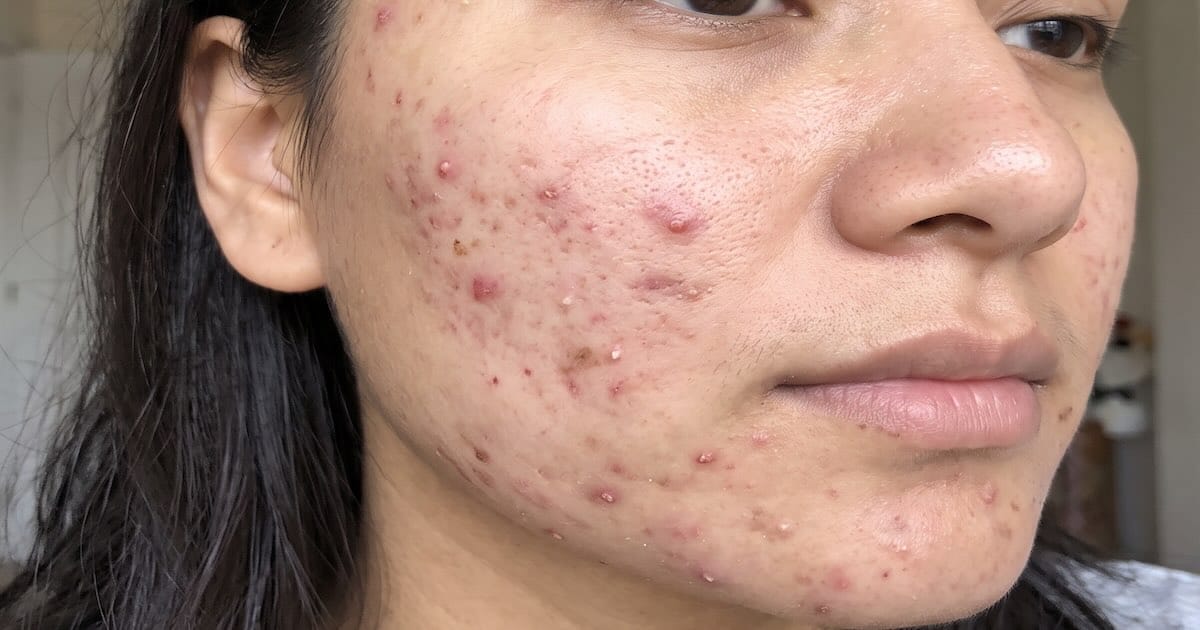
Medically Reviewed by: Dr. Utsav Sharma, MD Dermatology, Venereology & Leprology (Nepal Medical Council Reg. No. 7619) | Official Profile
Date Published & Last Medically Reviewed: October 24, 2026
Primary Study Reviewed: Li et al., Signal Transduction and Targeted Therapy (Nature Portfolio, 2026) [1]
Quick Summary:
- Global Burden: Global Burden of Disease (GBD) data estimates that acne vulgaris affects approximately 9.4% of the world’s population across all ages, ranking it as the eighth most prevalent disease globally [1], [2].
- Adult Acne Is Common: Epidemiological surveys report that 10% to 12% of adult women experience persistent or late-onset facial acne, often associated with androgen sensitivity, glycemic load, and chronic stress [1], [3].
- Four Interacting Biological Processes: Acne generally involves four overlapping mechanisms within the hair follicle and oil gland: increased sebum production, abnormal pore keratinization, shifts in Cutibacterium acnes bacterial strains, and localized immune inflammation [1].
- Standard Care vs. Investigational Research: Guideline-recommended treatments—such as topical retinoids, benzoyl peroxide, clascoterone, and physician-monitored oral medications—have established clinical evidence [4], whereas approaches like bacteriophage gels and CAMP-factor vaccines remain under investigation in preclinical and early human studies [1].
Many people view acne as a short-lived teenage phase or the result of an unwashed face. In dermatology practice, however, acne vulgaris is recognized as a chronic, multifactorial inflammatory disorder of the pilosebaceous unit that over-the-counter cleansers alone rarely resolve [1], [4]. Read our comprehensive answers to common acne questions for foundational guidance.
In 2026, researchers Ya Li, Guolin Li, Lian Wang, Dan Du, Jiaqi Li, Deyu Song, Tong Li, Ping Feng, Xian Jiang, and Jiong Li from West China Hospital, Sichuan University, published an extensive scientific review in the Nature Portfolio journal Signal Transduction and Targeted Therapy [1].
At Derma Clinic, we evaluate peer-reviewed dermatological literature to help patients understand the science behind their skin. Below, we examine what this 2026 review reports on acne biology, how established clinical treatments compare with experimental research, and when to seek a dermatologist’s evaluation.
What Causes Acne? The Four Main Biological Processes
Acne develops inside the pilosebaceous unit—the microscopic structure in human skin composed of a hair follicle and its attached oil-producing (sebaceous) gland [1]. Rather than resulting from a single cause, acne generally involves four interacting biological processes [1]:
Excess Sebum and Blocked Pores
- Androgen-Stimulated Sebum Production: Androgen hormones (such as testosterone and dihydrotestosterone) bind to receptors on sebaceous gland cells (sebocytes), stimulating higher sebum output and altering the ratio of skin surface lipids [1].
- Follicular Hyperkeratinization (Blocked Pores): In healthy skin, dead skin cells (keratinocytes) lining the follicular canal shed smoothly onto the surface. In acne-prone skin, abnormal cell proliferation and increased cohesion cause these cells to stick together and mix with sebum, forming a microscopic plug called a microcomedone—the earliest stage of blackheads and whiteheads [1].
Cutibacterium acnes and Inflammation
- Microbial Imbalance (C. acnes Dysbiosis): Cutibacterium acnes (C. acnes) is a normal, commensal bacterium present on healthy human skin [1]. Acne is not caused simply by the presence of C. acnes, but rather by a loss of microbial diversity inside an oil-rich, oxygen-deprived blocked pore, allowing specific pro-inflammatory phylotypes (such as IA1 strains) to overgrow [1].
- Innate and Adaptive Immune Inflammation: Overgrown C. acnes strains secrete enzymes (lipases, proteases, hyaluronidases) and Christie–Atkins–Munch-Petersen (CAMP) virulence factors [1]. These signals activate pattern-recognition receptors—including Toll-like receptors (TLR2 and TLR4) and the NLRP3 inflammasome—on surrounding skin and immune cells, triggering inflammatory cytokines (such as IL-1β, IL-8, and TNF-α) that cause redness, swelling, tenderness, and pus [1].
| Biological Process | Clinical Term | Mechanism Inside the Pilosebaceous Unit |
|---|---|---|
| 1. Sebum Alteration | Seborrhea | Androgens and growth factors stimulate sebaceous glands to secrete excess, lipid-altered oil [1]. |
| 2. Follicular Plugging | Hyperkeratinization | Cohesive keratinocytes fail to shed normally, forming a microcomedone that traps sebum [1]. |
| 3. Microbial Dysbiosis | C. acnes Strain Shift | Reduced phylotype diversity allows virulent C. acnes strains to dominate inside blocked follicles [1]. |
| 4. Immune Response | Perifollicular Inflammation | Bacterial metabolites activate TLR and inflammasome pathways, recruiting white blood cells [1]. |
Because sebum secretion and follicular keratinization are regulated by hormonal and cellular signaling below the skin surface, frequent facial scrubbing cannot prevent microcomedones from forming [1], [4]. Harsh mechanical scrubbing damages the stratum corneum barrier and can aggravate follicular inflammation [4].
Common Acne Risk Factors: Hormones, Diet, Stress, and Genetics
The 2026 review synthesizes evidence on internal physiological factors and external exposures that influence acne onset and severity [1]:
- High-Glycemic Diets and the Insulin–IGF-1 Axis: Clinical and observational studies suggest that foods that may contribute to acne—particularly high-glycemic-index carbohydrates and high intakes of skim dairy—can elevate blood insulin and Insulin-like Growth Factor 1 (IGF-1) [1], [4]. IGF-1 activates the PI3K/Akt/mTORC1 signaling cascade and suppresses FoxO1, which in turn promotes sebocyte lipogenesis and androgen receptor signaling [1].
- Endocrine and Metabolic Disorders: Persistent or treatment-resistant acne—especially when accompanied by irregular menstrual cycles, hirsutism (excess facial or body hair), or female-pattern hair thinning—is frequently associated with underlying hyperandrogenic or metabolic conditions such as Polycystic Ovary Syndrome (PCOS) or insulin resistance [1], [3]. Evaluating and addressing hormonal acne causes and management is necessary to reduce relapse rates [3], [4].
- Genetic Predisposition: Twin and genome-wide association studies (GWAS) indicate strong heritability in acne, with genetic variants linked to sebaceous gland structure, follicular remodeling, and inflammatory cytokine pathways [1].
- Psychological Stress and Occlusive Cosmetics: Chronic stress stimulates neuroendocrine mediators (such as corticotropin-releasing hormone and substance P) around sebaceous glands, while heavy, occlusive cosmetics or sunscreens can physically promote follicular plugging [1].
Adult Acne vs. Teenage Acne
Epidemiological data from the Global Burden of Disease study estimates the global age-standardized prevalence of acne at 9.4%, ranking it eighth among all human diseases [1], [2]. Cross-sectional population studies cited in the review report that approximately 85% of adolescents and young adults aged 12 to 24 experience some degree of acne [1], [4].
However, acne is also common in adults. Community-based surveys estimate that 10% to 12% of adult women (typically defined in clinical literature as women aged 25 years and older) experience persistent, relapsing, or late-onset facial acne [1], [3]. In clinical studies of adult female acne, up to 89.8% of patients present with lesions involving multiple facial zones simultaneously rather than purely lower-face involvement [1], [3].
| Clinical Characteristic | Teenage and Adolescent Acne (Ages 12–24) | Adult Female Acne (Ages 25+) |
|---|---|---|
| Reported Prevalence | Approximately 85% of adolescents and young adults [1], [4] | Estimated 10% to 12% of adult women in population surveys [1], [3] |
| Typical Facial Zones | Predominantly central T-zone (forehead, nose, upper cheeks) [1] | Often involves multiple zones (cheeks, chin, jawline, and temples) in ~90% of cases [1], [3] |
| Predominant Lesions | Open comedones (blackheads), closed comedones (whiteheads), and papulopustules [1] | Mild-to-moderate inflammatory papules and tender, deep-seated nodules [1], [3] |
| Key Associated Factors | Pubertal androgen surges and rapid sebum increase [1] | Peripheral androgen sensitivity, PCOS, stress, and impaired skin barrier function [1], [3] |
Quality-of-Life and Psychosocial Impact
Acne carries a substantial psychosocial burden. In quality-of-life studies cited by Li et al. utilizing validated instruments (such as the Dermatology Life Quality Index [DLQI]), up to 90% of surveyed acne patients reported some degree of negative impact on daily life or self-consciousness, and more than 50% of patients in clinical cohorts reported measurable symptoms of anxiety, social avoidance, or depression [1]. Timely medical management helps reduce both emotional distress and the risk of permanent atrophic or hypertrophic scarring [1], [4].
Established Acne Treatments vs. Emerging Research
When reading a scientific review, patients should distinguish between guideline-established medical treatments with proven clinical efficacy and experimental technologies that are still being evaluated in laboratory or early human trials [1], [4]. All acne therapies carry potential side effects, and treatment selection depends on lesion type, severity, scarring risk, pregnancy status, and medical history [4].
Topical Retinoids, Benzoyl Peroxide, Clascoterone, and Antibiotic Stewardship
A central clinical message in both the 2026 review [1] and American Academy of Dermatology (AAD) guidelines [4] is antibiotic stewardship. Widespread monotherapy with topical or oral antibiotics (such as erythromycin, clindamycin, doxycycline, and minocycline) has driven a global rise in antibiotic-resistant C. acnes strains and can disrupt healthy skin and gut microbiomes [1], [4].
Current evidence-based clinical acne treatment protocols rely on non-antibiotic foundations and targeted combinations [4]:
- Topical Retinoids (Adapalene, Tretinoin, Trifarotene, Tazarotene): Strongly recommended by clinical guidelines to normalize follicular keratinization, clear microcomedones, and exert anti-inflammatory effects [4].
- Benzoyl Peroxide (BPO): An antimicrobial agent that releases free oxygen radicals to kill C. acnes without inducing bacterial resistance. Whenever topical or oral antibiotics are prescribed, guidelines recommend combining them with BPO [4].
- Topical Anti-Androgens (Clascoterone 1% Cream): Unlike experimental pipeline drugs, clascoterone is an established, FDA-approved topical androgen receptor inhibitor available in several markets. Clinical trials demonstrate that it competitively blocks dihydrotestosterone (DHT) binding locally in sebocytes to reduce sebum and inflammation without systemic hormonal side effects [1], [4].
- Azelaic Acid and Salicylic Acid: Used as adjuncts or alternatives for mild-to-moderate comedonal and inflammatory acne, particularly when post-inflammatory hyperpigmentation is present [4].
- Systemic Prescription Therapies: Combined oral contraceptives or spironolactone for eligible female patients with hormonal patterns; short-course oral tetracyclines (limited to 3–4 months alongside BPO); or physician-monitored oral isotretinoin for severe nodulocystic, treatment-resistant, or scarring acne [1], [4].
Microencapsulation, Bacteriophages, and Vaccines (Evidence & Limitations)
The 2026 review also surveys novel delivery systems and biological therapies aimed at reducing irritation or targeting C. acnes selectively [1]:
- Microencapsulated Formulations (Approved in Select Markets / Ongoing Formulation Research): Microencapsulation encloses active molecules (such as benzoyl peroxide or tretinoin) inside silica or polymeric microspheres to provide gradual follicular release [1]. While clinical trials of specific FDA-approved microencapsulated gels show improved local tolerability compared to conventional vehicles, dryness and erythema can still occur in sensitive patients [1], [4].
- Bacteriophage Therapy (Preclinical & Early Phase I/II Human Research): Bacteriophages are viruses that infect and lyse specific bacteria [1]. In laboratory (in vitro), mouse models, and early-phase human safety/pilot studies, topical phage formulations reduced C. acnes colonization—including antibiotic-resistant strains—without disturbing other skin flora [1]. However, large-scale Phase III randomized controlled trials confirming long-term clinical efficacy, phage stability, and regulatory approval are still pending [1].
- Topical & Oral Probiotics (Early Clinical Trials): Investigated to support skin barrier function and inhibit C. acnes overgrowth via bacteriocins; currently considered supportive rather than standalone medical therapy due to heterogeneous trial designs [1].
- Targeted Acne Vaccines / CAMP-Factor Immunotherapy (Preclinical & Early Clinical Investigation): Researchers are studying monoclonal antibodies and vaccines targeting C. acnes Christie–Atkins–Munch-Petersen (CAMP) factor 2 to neutralize bacterial-induced inflammation without eradicating commensal C. acnes [1], [5]. While mouse models and ex vivo human acne lesion models show reduced interleukin-8 (IL-8) and IL-1β expression [5], and early human clinical trials are underway, no acne vaccine is currently approved or available for routine patient care [1].
Comparison of Acne Therapies: Evidence Status and Clinical Role
| Therapy / Technology | Current Evidence & Regulatory Status | Intended Clinical Role | Key Limitations & Risks |
|---|---|---|---|
| Topical Retinoids + Benzoyl Peroxide | Established Standard Care (Strong guideline recommendation; Phase III/IV data) [4] | First-line therapy for mild-to-moderate comedonal and inflammatory acne | Can cause initial erythema, scaling, or stinging; retinoids are contraindicated during pregnancy [4]. |
| Oral Isotretinoin / Anti-Androgens | Established Specialist Care (Strong guideline recommendation) [4] | Severe nodulocystic acne, scarring risk, or hormonally driven female acne | Isotretinoin is strictly teratogenic (requires pregnancy prevention) and needs laboratory monitoring [4]. |
| Topical Clascoterone (1% Cream) | Established in Approved Markets (FDA-approved; Phase III RCT evidence) [1], [4] | Topical androgen receptor inhibition for patients aged 12+ | Regional availability and cost vary; mild local skin reactions can occur [4]. |
| Microencapsulated Retinoid/BPO | Clinical Use in Select Formulations (Vehicle technology supported by RCTs) [1] | Gradual drug release to improve skin barrier tolerability | Reduces—but does not completely eliminate—the risk of local irritation [1]. |
| Topical Bacteriophage Gels | Investigational (Preclinical models & early Phase I/II human trials) [1] | Selective lysis of virulent/resistant C. acnes strains | Not yet approved for routine prescription; requires larger Phase III efficacy trials [1]. |
| CAMP-Factor Acne Vaccines | Experimental / Preclinical to Early Clinical (Animal/ex vivo data [5]; early trials [1]) | Neutralizing C. acnes inflammatory toxins without killing commensal flora | Long-term human safety, durability of response, and clinical efficacy remain unproven [1]. |
Clinical Perspective: What This Means for Patients in Nepal
Medical Review & Clinical Commentary by Dr. Utsav Sharma, MD (NMC No. 7619):
“When reviewing this 2026 study for our patients in Kathmandu, two practical lessons stand out. First, we frequently see patients who have used over-the-counter clindamycin or azithromycin gels—or unprescribed fixed-dose steroid creams—for months. Standalone antibiotics rapidly select for resistant Cutibacterium acnes, while topical steroids thin the facial skin and trigger severe rebound eruptions. Second, patients often ask if they should wait for new technologies like acne vaccines. While microbiome-sparing research is promising, established treatments like adapalene, benzoyl peroxide, azelaic acid, and properly monitored systemic therapies already achieve excellent clearance when tailored to South Asian skin types—where preventing post-inflammatory hyperpigmentation (dark marks) and scarring requires gentle barrier care.”
When Should You See a Dermatologist for Acne?
While occasional mild whiteheads or blackheads may improve with gentle cleansing and non-comedogenic skincare, an in-person evaluation with a board-certified dermatologist is recommended if you notice [4]:
- Lack of Improvement After 8 to 12 Weeks: Most evidence-based topical treatments require 8 to 12 weeks of consistent application to reduce follicular plugging and inflammation [4].
- Deep, Tender Nodules or Cysts: Painful subcutaneous lesions indicate deep dermal inflammation that over-the-counter washes cannot penetrate [4].
- Early Scarring or Persistent Hyperpigmentation: Indented (atrophic) scars, raised (keloidal) scars, or dark post-inflammatory marks—which occur frequently in Fitzpatrick skin types III–V—respond best to early medical intervention [4].
- Suspected Endocrine Triggers: Persistent jawline or facial acne accompanied by irregular menstrual periods, sudden weight changes, or excess facial hair [3], [4].
- Emotional Distress: Acne that causes anxiety, low self-esteem, or avoidance of social activities warrants proactive medical support [1].
Frequently Asked Questions (FAQs) About Acne
Does washing my face more often cure acne?
No. Acne develops beneath the surface of the skin through hormone-stimulated sebum production, cohesive follicular cells, and localized inflammation [1]. Washing more than twice a day or using abrasive scrubs can strip the skin’s lipid barrier and worsen irritation [4].
Why am I still getting acne in my late 20s, 30s, or 40s?
Adult acne—which affects an estimated 10% to 12% of adult women—is often linked to sebaceous gland sensitivity to androgen hormones, high-glycemic dietary patterns, chronic stress, or endocrine conditions such as PCOS [1], [3]. Because adult skin often has slower cell turnover and a more sensitive barrier than adolescent skin, treatment plans must balance active ingredients with barrier support [3].
How long does medical acne treatment take to work?
Because a microscopic clogged pore (microcomedone) takes several weeks to form and resolve, most guideline-recommended topical treatments require 6 to 8 weeks before initial improvement is visible, and 3 to 6 months for substantial clearance [4]. Treatment response varies by individual, and stopping therapy too early is a common cause of relapse.
Why shouldn’t I use leftover antibiotic creams on my pimples?
Using a topical antibiotic (such as clindamycin or erythromycin) by itself promotes antibiotic-resistant Cutibacterium acnes strains and disrupts beneficial skin bacteria [1], [4]. Clinical guidelines state that topical antibiotics should not be used as monotherapy and should instead be combined with benzoyl peroxide and a retinoid under medical supervision [4].
Conclusion and Next Steps
The 2026 Signal Transduction and Targeted Therapy review underscores that acne vulgaris is a complex, immune-mediated disorder of the pilosebaceous unit rather than a simple hygiene issue [1]. While emerging approaches—such as bacteriophage gels and CAMP-factor vaccines—offer promising directions for microbiome-friendly care in the future, they remain under clinical investigation [1].
Today, dermatologists rely on established, guideline-supported therapies that target sebum production, follicular plugging, bacterial balance, and inflammation while minimizing antibiotic resistance [4]. Because treatment benefits and side effects vary from person to person, an accurate clinical diagnosis is the safest starting point.
If you are experiencing persistent adolescent or adult acne, hormonal flare-ups, or post-acne scarring, you can learn more about our acne treatment services in Kathmandu or schedule a dermatology consultation at Derma Clinic for an individualized assessment.
References and Medical Review
- Li, Y., Li, G., Wang, L., Du, D., Li, J., Song, D., Li, T., Feng, P., Jiang, X., & Li, J. (2026). Acne: epidemiology, risk factors, pathogenesis, management and cutting-edge research. Signal Transduction and Targeted Therapy (Nature Portfolio / Springer Nature), 11, 446. DOI: 10.1038/s41392-026-02964-2
- Vos, T., Flaxman, A. D., Naghavi, M., et al. (2012). Years lived with disability (YLDs) for 1160 sequelae of 289 diseases and injuries 1990–2010: a systematic analysis for the Global Burden of Disease Study 2010. The Lancet, 380(9859), 2163–2196. DOI: 10.1016/S0140-6736(12)61729-2
- Dréno, B., Thiboutot, D., Layton, A. M., Berson, D., Perez, M., & Kang, S. (2015). Large-scale international study enhancing skin clearance in adult female acne: clinical characteristics and epidemiology. Journal of the European Academy of Dermatology and Venereology, 29(6), 1096–1106. DOI: 10.1111/jdv.12757
- Reynolds, R. V., Yeung, H., Cheng, C. E., et al. (2024). Guidelines of care for the management of acne vulgaris. Journal of the American Academy of Dermatology (JAAD), 90(5), 1006.e1–1006.e30. DOI: 10.1016/j.jaad.2023.12.017
- Wang, Y., Hata, T. R., Tong, Y. L., et al. (2018). The anti-inflammatory activities of Propionibacterium acnes CAMP factor-targeted acne vaccines. Journal of Investigative Dermatology, 138(11), 2355–2364. DOI: 10.1016/j.jid.2018.05.032
- Medical Reviewer: Dr. Utsav Sharma, MD Dermatology, Venereology & Leprology (Nepal Medical Council Reg. No. 7619), Senior Consultant Dermatologist at Derma Clinic PVT LTD, Kathmandu, Nepal. View Dr. Sharma’s Official Website.
- Editorial & Copyright Disclosure: This article is an independent, plain-language synthesis and clinical commentary written for patient education. In compliance with international copyright laws and Creative Commons (CC BY-NC-ND 4.0) attribution standards, no verbatim text blocks, figures, or copyrighted tables from the primary publication have been reproduced.