
Who Should Get Tested?
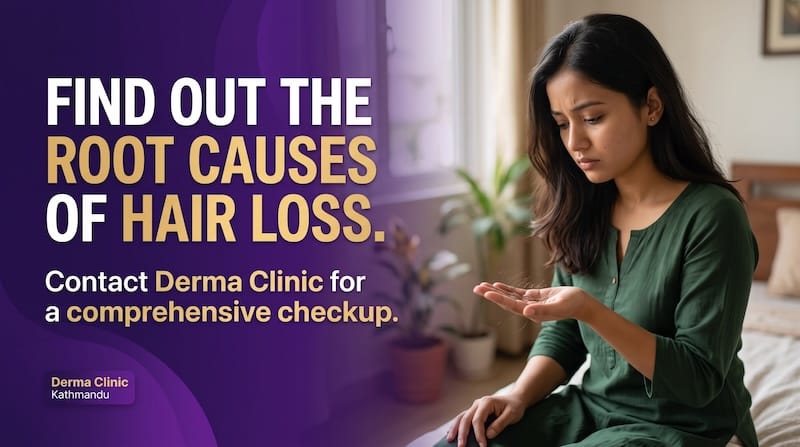
Consider a comprehensive blood panel if you are experiencing any of the following:
- Hair shedding that has lasted consistently for more than 3 months.
- A noticeably widening hair parting or a thinner ponytail.
- Hair loss accompanied by irregular periods, adult acne, unwanted facial hair, fatigue, or sudden weight changes.
- Shedding that continues long after childbirth, a severe illness, surgery, or extreme dieting.
- No noticeable improvement after using over-the-counter shampoos, serums, or supplements.
Why Hair Fall in Women Often Starts Inside the Body
The hair follicle is a highly active micro-organ that requires immense energy and a stable hormonal environment to function. When the body’s internal balance is disrupted, hair growth is often the first system to shut down. Common internal triggers include:
- Hormonal Shifts: Conditions like Polycystic Ovary Syndrome (PCOS) can increase androgen levels, which progressively shrink the hair follicles.
- Postpartum Changes: A sudden drop in protective estrogen levels after childbirth frequently triggers widespread shedding (Telogen Effluvium).
- Nutritional Deficiencies: Iron, Vitamin D, and B12 are critical for cell division. Deficiencies force the body to divert nutrients away from hair to protect vital organs.
- Thyroid Dysfunction: Both underactive and overactive thyroids disrupt cellular metabolism, causing hair to thin, dry out, and shed prematurely.
Female Hair Loss Blood Test Packages and Prices
Choose the package that best fits your symptoms. Both options provide clinical data to help your dermatologist create a customized treatment plan.
Standard Package
Usually Rs 20,000Rs 15,000Save Rs 5,000Best for slow, gradual thinning or steady daily shedding.
- Serum Ferritin
- Vitamin D & Vitamin B12
- Thyroid Function Tests (TFT)
- Total and Free Testosterone
- DHEA-S & Prolactin
- Fasting Blood Sugar & Lipid Profile
- CBC, LFT, Urea, Creatinine, Urine Routine
Premium Package
Usually Rs 27,000Rs 22,000Save Rs 5,000Best for sudden, severe, patchy or unexplained hair loss.
- Serum Ferritin
- Vitamin D & Vitamin B12
- Thyroid Function Tests (TFT)
- Total and Free Testosterone
- DHEA-S & Prolactin
- Fasting Blood Sugar & Lipid Profile
- CBC, LFT, Urea, Creatinine, Urine Routine
- Plus these advanced tests
- LH and FSH
- Serum Cortisol
- ANA (Antinuclear Antibody)
- TPHA
Compare Every Test: Standard vs Premium
| Test | Standard | Premium |
|---|---|---|
| Nutritional stores | ||
| Serum Ferritin | Included | Included |
| Vitamin D | Included | Included |
| Vitamin B12 | Included | Included |
| Hormonal balance | ||
| Thyroid Function Tests (TFT) | Included | Included |
| Total and Free Testosterone | Included | Included |
| DHEA-S | Included | Included |
| Prolactin | Included | Included |
| Metabolic health | ||
| Fasting Blood Sugar | Included | Included |
| Lipid Profile | Included | Included |
| General wellness | ||
| CBC, LFT, Urea, Creatinine, Urine Routine | Included | Included |
| Advanced screening (Premium only) | ||
| LH and FSH | Not included | Included |
| Serum Cortisol | Not included | Included |
| ANA (Antinuclear Antibody) | Not included | Included |
| TPHA | Not included | Included |
Why a Hair Loss Blood Test Is Worth Doing
- Uncovers treatable deficiencies: Low iron stores, Vitamin D, and B12 are common, highly correctable contributors to excessive daily shedding.
- Identifies hidden hormonal conditions: Hair changes are frequently the first symptom of underlying conditions like PCOS or thyroid disease.
- Helps guide medical treatments: Finding the exact cause prevents trial-and-error treatments, saving time and preserving hair density.
- Ensures medication safety: Baseline liver (LFT), kidney (Urea/Creatinine), and blood counts help your dermatologist confirm your body is healthy enough for certain oral hair-growth medications.
- Provides a measurable baseline: Repeat testing allows your doctor to monitor if your internal environment is actively improving.
Why Each Test Matters for Your Hair
Serum Ferritin
What it checks: The storage levels of iron in your body.
Why it matters for hair: Hair matrix cells require iron to function properly. Low iron stores are strongly linked with increased shedding (Telogen Effluvium), even if your standard hemoglobin levels appear normal.
Why it should be done: Reference ranges are broad. What is considered “normal” for general health is often too low for optimal hair growth. Testing helps your dermatologist determine if iron supplementation is required.
Vitamin D
What it checks: Essential vitamin required for cycle regulation.
Why it matters for hair: Vitamin D receptors are deeply involved in initiating the hair’s active growth phase. Low levels are common in South Asia and are frequently observed in patients experiencing diffuse thinning.
Vitamin B12
What it checks: A vitamin critical for DNA synthesis.
Why it matters for hair: Because hair follicle cells divide rapidly, they rely heavily on B12. Deficiencies are particularly common among vegetarians, vegans, or those with digestive issues.
Thyroid Function Tests (TFT)
What it checks: How efficiently your thyroid gland is regulating cellular metabolism (TSH, T3, T4).
Why it matters for hair: The hair cycle is highly sensitive to thyroid fluctuations. Both underactive (hypothyroidism) and overactive (hyperthyroidism) thyroid states disrupt the growth cycle, leading to thinning and shedding.
Total and Free Testosterone
What it checks: The circulating levels of androgens present in women.
Why it matters for hair: Elevated androgens can cause susceptible hair follicles to progressively miniaturize. Testing these levels helps identify hormonal drivers of hair loss, such as PCOS.
DHEA-S
What it checks: Hormones produced primarily by the adrenal glands.
Why it matters for hair: Raised DHEA-S levels can point to excess adrenal androgens, helping your doctor pinpoint exactly where a hormonal imbalance is originating.
Prolactin
What it checks: A hormone from the pituitary gland.
Why it matters for hair: High prolactin can disturb menstrual cycles and is sometimes linked with diffuse shedding. It is also tested because it can occasionally mimic the symptoms of PCOS.
Fasting Blood Sugar
What it checks: Your baseline metabolic health and insulin levels.
Why it matters for hair: Improving insulin resistance can help reduce androgen excess in PCOS, creating a better environment for hair recovery.
Lipid Profile
What it checks: Cholesterol and triglycerides.
Why it matters for hair: While not a direct cause of hair loss, lipid profiles are evaluated to assess the broader metabolic picture, especially in patients with suspected insulin resistance or PCOS.
CBC, LFT, Urea, Creatinine, Urine Routine
What they check: Red/white blood cells, liver function, and kidney filtration.
Why it matters for hair: These are standard safety checks. They confirm your baseline health and ensure your body is ready to safely metabolize clinical hair-loss prescriptions.
LH and FSH
What they check: Pituitary hormones that control your ovarian function.
Why it matters for hair: A raised LH to FSH ratio is common in PCOS, though not required for a diagnosis. It is highly useful for women experiencing both hair loss and irregular menstrual cycles.
Serum Cortisol
What it checks: A primary adrenal hormone.
Why it matters for hair: Cortisol is checked to rule out cortisol excess (such as Cushing’s syndrome), which can contribute to skin changes and hair thinning.
ANA (Antinuclear Antibody) & TPHA
What they check: Autoimmune activity (ANA) and past/present syphilis infection (TPHA).
Why it matters for hair: Autoimmune conditions (like lupus) can cause scarring hair loss, while secondary syphilis is a known cause of unique, “moth-eaten” patchy hair loss.
What a Blood Test Cannot Show
While blood tests are powerful tools, they cannot diagnose everything. The most common cause of hair loss—Female Pattern Hair Loss (Androgenetic Alopecia)—is primarily driven by localized genetic sensitivity in the scalp, meaning your circulating androgen levels might appear completely normal on a blood test.
If your blood work returns “normal,” this is actually a positive result: it rules out systemic illnesses and allows the dermatologist to confidently diagnose and treat genetic thinning using a physical scalp examination.
Which Package Should You Choose?
Standard (Rs 15,000)
Ideal if you are experiencing slow, gradual thinning or steady daily shedding. It serves as an excellent baseline workup before initiating medical hair treatments.
Premium (Rs 22,000)
Recommended if your hair loss began suddenly, comes with irregular periods, cystic acne, unusual facial hair, joint pain, or if previous treatments have failed.
How to Prepare for Your Hair Loss Blood Test
- Fasting is Required: Do not eat for 8 to 10 hours before the test (drinking water is permitted).
- Timing Matters: Book your test for the morning, as hormones like Cortisol and Testosterone naturally fluctuate later in the day.
- Stop Biotin Supplements: Stop taking any Biotin or “Hair, Skin & Nail” vitamins at least 72 hours before the test, as Biotin actively interferes with Thyroid (TFT) assays.
- Menstrual Cycle Timing: If selecting the Premium package, LH and FSH levels are most accurately assessed on Day 2, 3, 4, or 5 of your cycle.
Frequently Asked Questions
How much does a hair loss blood test cost?
At Derma Clinic Kathmandu, the Standard Package is Rs 15,000 and the Premium Package is Rs 22,000. Both packages include a comprehensive review of your results by our consultant dermatologist.
Which blood tests are done for hair fall in women?
A standard clinical workup typically checks nutritional stores (Serum Ferritin, Vitamin D, Vitamin B12), thyroid function (TSH, T3, T4), and hormonal balance (Total and Free Testosterone, DHEA-S, Prolactin), alongside baseline metabolic panels.
Do I need to stop using Minoxidil before the test?
No. Topical serums like Minoxidil apply locally to the scalp and do not alter the systemic hormone or iron levels in your bloodstream.
Can this test help with Postpartum Hair Loss?
Yes. Postpartum shedding usually peaks around 3 to 4 months after childbirth and naturally settles within 6 to 12 months. However, the shedding is frequently worsened by depleted iron stores or postpartum thyroid shifts. Identifying and treating these deficiencies helps the hair recover much faster.
Is hair loss caused by PCOS reversible?
If treated early, further follicular miniaturization can be slowed, and some density can often be regained through a combination of internal hormone management and localized follicle stimulation.
Medical References & Clinical Guidelines
- Almohanna, H. M., et al. (2019). “The Role of Vitamins and Minerals in Hair Loss: A Review.” Dermatology and Therapy.
- Famenini, S., & Goh, C. (2014). “Evidence for supplemental treatments in androgenetic alopecia.” Journal of Drugs in Dermatology.
- Olsen, E. A., et al. (2005). “Iron deficiency in female pattern hair loss, chronic telogen effluvium, and control groups.” Journal of the American Academy of Dermatology.
Visit Derma Clinic in Kathmandu
Derma Clinic PVT LTD
4th Floor, Bishal Bhawan
Basundhara Chowki, Kathmandu, Nepal
Phone: +977 9801358600 / 015918555
Call time: 9:00 AM to 7:00 PM
Stop Guessing. Start Treating.
Finding the true root cause is the most important step in your hair regrowth journey. Book your comprehensive blood test and dermatology consultation today.
Book Your Assessment