
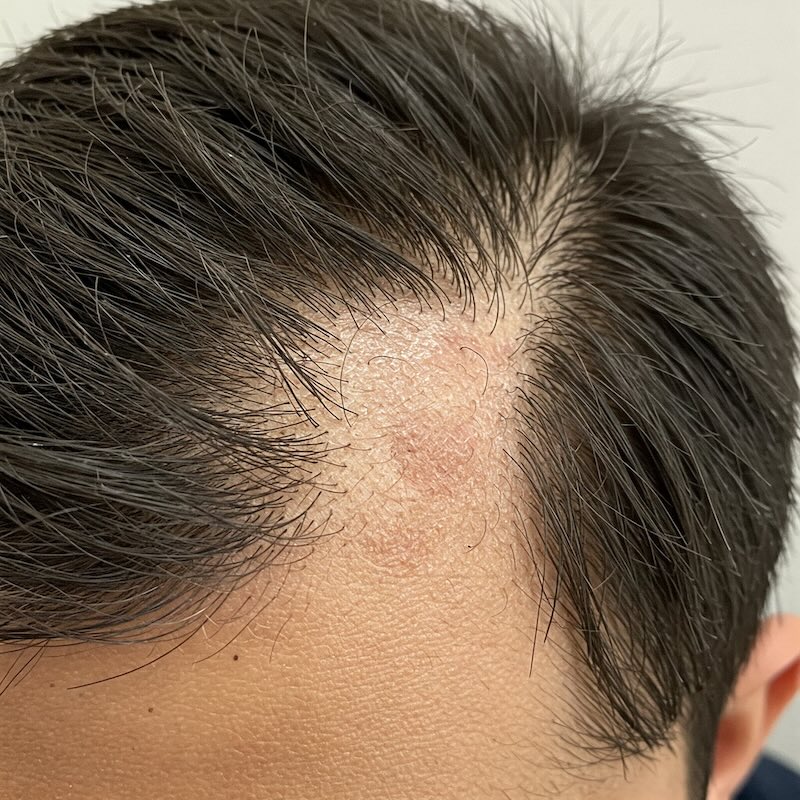
Alopecia Areata is a chronic autoimmune condition characterized by sudden, non-scarring hair loss, typically in localized patches. This condition can significantly affect an individual’s psychological and emotional well-being, making it essential to understand its causes, clinical presentation, associated conditions, diagnostic methods, and treatment options. Below is a detailed exploration of alopecia areata. If you are having patchy hair loss, contact our Derma Clinic Kathmandu Nepal for personalized diagnosis and treatment.At Derma Clinic Kathmandu, dermatologist Dr. Utsav Sharma offers proven treatments including:
– Intralesional steroid injections (80% regrowth in 12 weeks)
– Liquid nitrogen Cryotherapy
– Minoxidil combination therapy & PRP/GFC therapy for Nepali skin types
– Other Oral systemic medicine like oral steriod, and system autoimmune therapy.
Early treatment within 3 months yields best results. Common in Kathmandu due to stress/autoimmune factors.
Experiencing patchy bald spots? Book consultation at Derma Clinic Basundhara Call 9801358600 for personalized diagnosis and effective therapies.
Etiology and Pathophysiology
Alopecia areata arises from an autoimmune response where the immune system mistakenly targets hair follicles. The key mechanisms include:
- Loss of Immune Privilege: Hair follicles usually evade immune attacks, but this protection is disrupted in alopecia areata.
- Immune Attack: CD8+ T cells and inflammatory cytokines like interferon-gamma (IFN-γ) and interleukin-15 (IL-15) play critical roles. These activate the Janus kinase-signal transducer and activator of transcription (JAK-STAT) pathway, leading to follicular inflammation and hair loss.
Genetic Factors
Alopecia areata is a polygenic disease influenced by several genes:
- Human Leukocyte Antigen (HLA) complex genes (e.g., HLA-DQA1, HLA-DQB1).
- Other implicated genes include AIRE and FLG.
Family history increases susceptibility, but environmental triggers are often necessary for disease onset. Identical twin studies show only 42–55% concordance rates, highlighting the role of non-genetic factors.
Environmental Triggers
Potential triggers include:
- Emotional or physical stress
- Illness or infections
- Certain medications or vaccinations
- Cigarette smoking
Clinical Presentation and Types
Alopecia areata manifests in various forms, each with unique characteristics:
| Type | Description | Prognosis |
|---|---|---|
| Patchy Alopecia Areata | Most common; localized round/oval bald patches on the scalp or body. | High likelihood of spontaneous regrowth within a year. |
| Alopecia Totalis | Complete loss of scalp hair. | Lower chance of spontaneous regrowth; requires aggressive treatment. |
| Alopecia Universalis | Loss of all hair on the scalp, face, and body. | Rare; significant functional and psychological impact. |
| Diffuse Alopecia Areata | Sudden thinning across the entire scalp. | Often misdiagnosed as telogen effluvium. |
| Ophiasis Pattern | Band-like hair loss along the scalp margins (occipital/temporal areas). | Difficult to treat; often persistent. |
Associated Conditions
Alopecia areata often coexists with other conditions:
- Autoimmune Disorders:
- Thyroid diseases (e.g., Hashimoto’s thyroiditis)
- Vitiligo
- Type 1 diabetes
- Lupus erythematosus
- Atopic Conditions:
- Eczema
- Asthma
- Allergic rhinitis
- Nail Abnormalities:
- Pitting, brittleness, or red spots on lunulae.
- Occurs in 10–15% of cases, more common in severe forms.
- Psychological Impact:
- Increased risk of depression, anxiety, and social withdrawal.
- Requires mental health support alongside dermatological care.
- Eye Complications:
- Rarely associated with retinal issues like detachment or vascular occlusion.
Diagnosis
Diagnosis is primarily clinical but may involve additional tools:
| Diagnostic Tool | Purpose |
|---|---|
| Clinical Examination | Identifies characteristic bald patches and “exclamation mark hairs.” |
| Dermoscopy | Visualizes features like yellow dots (sebum-filled follicles) and black dots (broken hairs). |
| Hair Pull Test | Assesses active shedding by gently pulling strands from different scalp areas. |
| Scalp Biopsy | Confirms diagnosis if uncertain; shows lymphocyte infiltration around follicles (“bee-swarm pattern”). |
| Blood Tests | Screens for associated conditions (e.g., thyroid dysfunction, vitamin D deficiency), VDRL/TPHA to rule out Syphillis. Other routine tests are also done to start oral medicine like Oral steriods,Hydroxychloroquine, Cyclosporin etc., |
Check out our Article on: Blood Tests on Hair loss
Treatment Options
Treatment focuses on halting autoimmune activity and promoting hair regrowth.
| Treatment Method | Best For | Expected Timeline |
| Steroid Injections | Patchy Alopecia Areata | 4–12 weeks |
| Cryotherapy | Small / Localized Patches | 3–5 sessions |
| JAK Inhibitors | Severe / Extensive AA | 3–6 months |
| PRP / GFC Therapy | Resistant Cases | 2–4 months |
Topical Therapies
- Corticosteroids: Reduce inflammation; used for mild cases.
- Minoxidil: Stimulates regrowth.
- Anthralin Cream: Immunomodulating effects; often used for children.
- Contact Immunotherapy: Induces mild allergic reactions to stimulate regrowth.
Injectable Treatments
- Intralesional corticosteroids (e.g., triamcinolone acetonide) for localized patches.
Liquid Nitrogen Cryotherapy
- Limited studies but it seems to work while applied at 2 weeks interval for 3-5 sessions. Even in out clinic we saw good result after several unsuccessful attempts with IL injection.
Systemic Treatments
- Oral corticosteroids or immunosuppressants like cyclosporine for severe cases.
- Long-term use is limited due to side effects.
Light Therapy
- Phototherapy with UV light or low-level laser therapy (LLLT) is under investigation.
Latest Advances: JAK Inhibitors
The development of Janus Kinase (JAK) inhibitors has revolutionized treatment:
| Drug Name | Approval Year | Key Features |
|---|---|---|
| Baricitinib (Olumiant®) | 2022 | First FDA-approved JAK inhibitor for adults with severe alopecia areata. |
| Ritlecitinib (LITFULO®) | 2023 | Approved for adults/adolescents aged 12+; first option for younger patients. |
| Deuruxolitinib (Leqselvi™) | 2024 | Shows sustained efficacy in long-term studies for adults with severe alopecia. |
Other JAK inhibitors like tofacitinib and upadacitinib are being studied further.
Emerging Therapies
Biologics targeting specific cytokines (e.g., Dupilumab for IL-4/IL-13 inhibition) are under investigation.
Living With Alopecia Areata
Emotional Well-being & Coping
We understand that hair loss is never “just cosmetic.” It can feel like losing a part of your identity. At Derma Clinic, we treat the person, not just the patch.
Understanding the Psychological Impact
Sudden hair loss can be traumatic. Many of our patients in Kathmandu report feeling anxiety, social withdrawal, or a loss of confidence when patches first appear. Please know that these feelings are a normal reaction to an autoimmune event, and you are not alone.
Stress Management is Part of Treatment
Since stress is a known trigger for alopecia flares, managing your emotional health is actually part of your prescription. We encourage patients to:
- Practice mindfulness or yoga to lower cortisol levels.
- Focus on adequate sleep and nutrition to support immune health.
- Join support groups to share experiences with others facing similar challenges.
A Reassuring Outlook
Here is the good news: Alopecia Areata is not scarring, meaning your hair follicles remain alive. In fact, approximately 50% to 80% of patients experience spontaneous regrowth within one year. With treatments like steroid injections, liquid nitrogen cryotherapy, GFC/PRP , oral and topical medicine, we can significantly accelerate this recovery process.
Alopecia Areata FAQ
1. What causes alopecia areata?
Autoimmune attack on hair follicles triggered by genetics, stress, or infections. Common in Kathmandu due to high stress levels.
2. Is alopecia areata permanent?
No, 50-80% regrow hair spontaneously within 1 year. Early treatment improves outcomes significantly.
3. How quickly does alopecia areata treatment work?
Steroid injections show regrowth in 4-12 weeks. Cryotherapy needs 3-5 sessions. Full results: 3-6 months.
4. Does alopecia areata affect only scalp?
No, can affect eyebrows, beard, eyelashes. Nail pitting occurs in 10-20% cases.
5. Can alopecia areata be cured completely?
Not curable but manageable. 80% achieve long-term remission with proper treatment.
6. What are side effects of steroid injections?
Temporary skin thinning, pain at injection site, rare hypopigmentation. Safe under dermatologist supervision.
7. Is cryotherapy painful for alopecia areata?
Mild stinging during treatment. Blistering may occur but resolves in 7-10 days.
8. Can children get alopecia areata treatment?
Yes, topical steroids or oral steroids can be given.
9. How much does alopecia areata treatment cost in Kathmandu?
Steroid injections: NPR 2,500-5,000 per session. Full course: NPR 10,000-15,000 depending on severity. GFC Cost Rs 8000 per session. Doctor consultation charge is Rs 750.
10. When to consult dermatologist for patchy hair loss?
Immediate if >5 patches, rapid progression, nail changes, or emotional distress. Call Derma Clinic: 9801358600.
Conclusion
Alopecia Areata is a multifaceted condition influenced by genetic predisposition, immune dysregulation, and environmental factors. While traditional treatments address localized cases effectively, recent advancements like JAK inhibitors offer hope for severe forms. Comprehensive care should also address associated conditions and psychological impacts to improve overall quality of life for patients. Ongoing research continues to expand therapeutic options for this challenging disorder.
Where to Treat Alopecia Areata.
For Alopecia Treatment Contact Derma Clinic Kathmandu. We’ll provide comprehensive treatment available at Nepal.
Call: 9801358600
Derma Clinic
4th Floor Bishal Bhawan
Basundhara Chowki,
Kathmandu