
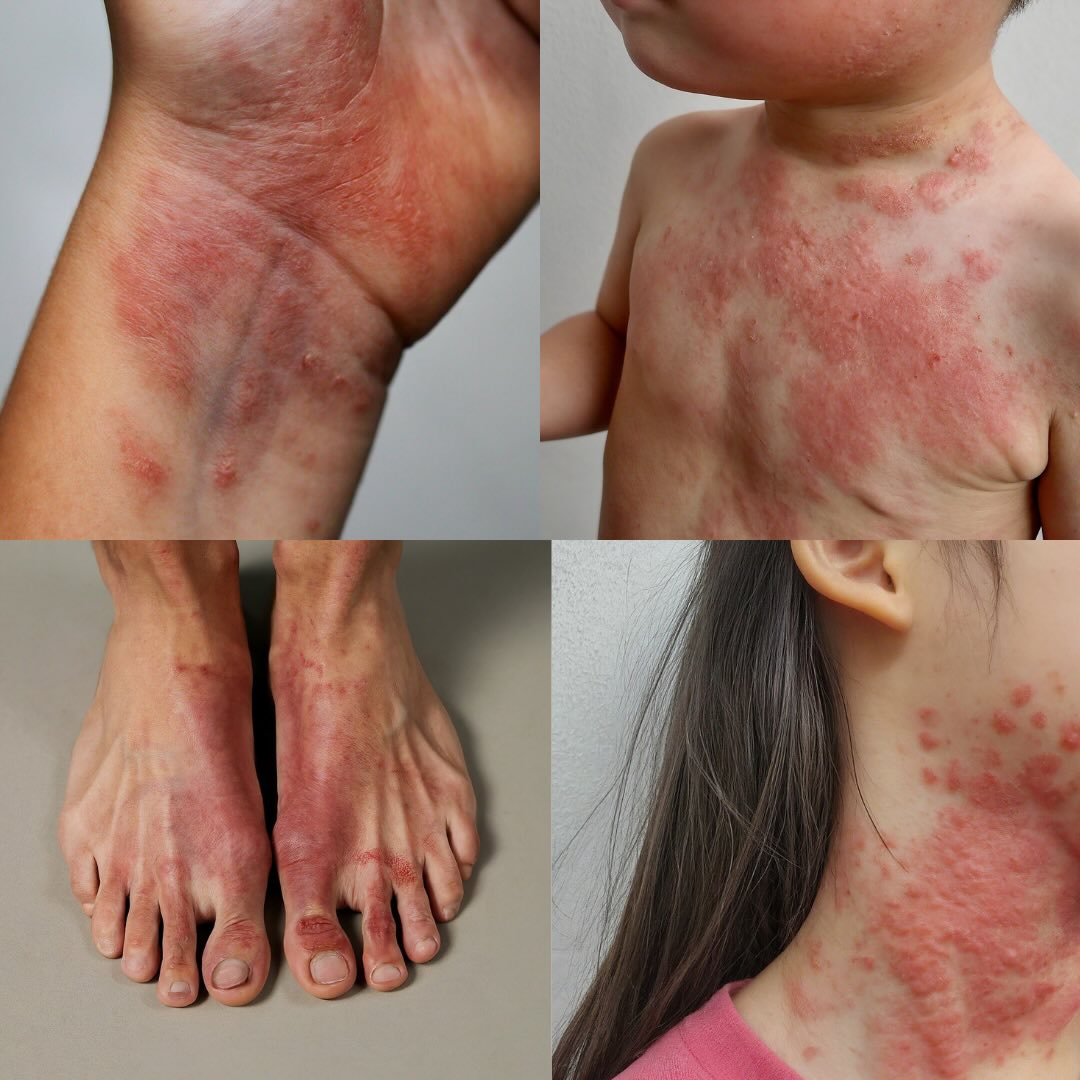
Dealing with eczema can be exhausting, but understanding the underlying causes, proven treatments, and realistic long-term management strategies can help you regain control of your skin. This guide restores the fuller educational depth of the original draft while correcting the link structure, tightening the medical wording, and keeping investigational therapies clearly separate from established treatment options.
TL;DR: The Fast Track to Eczema Relief
Eczema, most commonly atopic dermatitis, is a chronic inflammatory skin disease driven by skin-barrier dysfunction and immune dysregulation, so successful treatment usually requires both barrier repair and inflammation control. In current guideline-based care, the essentials are liberal moisturization, trigger reduction, flare treatment with appropriate topicals, and escalation to phototherapy, biologics, or oral systemic therapy when disease becomes moderate to severe.
- Barrier repair comes first: Thick moisturizers, especially ointments and heavy creams, remain the daily foundation of eczema care.
- Topicals are central: Topical corticosteroids still control flares, while several steroid-sparing prescription options can help in sensitive areas or maintenance plans.
- Systemic therapy has improved: Oral JAK inhibitors and biologic injections have expanded treatment options for patients with more severe disease.
- Triggers matter: Fragrance, harsh soaps, sweat, dust, climate changes, allergens, and stress can worsen disease in many patients.
- Diagnosis should be individualized: Patch testing and other allergy workups may be useful when contact triggers or atypical patterns are suspected.
Table of Contents
- TL;DR: The Fast Track to Eczema Relief
- Meet the Expert: Dr. Utsav Sharma
- Understanding Eczema: The Biology of the Itch-Scratch Cycle
- Recognizing Symptoms Across Different Life Stages
- The Itchy Dozen: Dietary and Environmental Triggers
- Essential Diagnostic Tests for Eczema
- The Ultimate Guide to Moisturizers: Creams, Ointments, and Oils
- Home Care and Environmental Control
- The Medical Treatment Arsenal: In-Depth Drug Profiles
- 2026 Pipeline and Breakthrough Eczema Treatments
- Integrative Care: The Ayurvedic Approach to Eczema
- Frequently Asked Questions About Eczema Treatment
- Expert Dermatology Care at Derma Clinic
- Medical References and Global Resources
Meet the Expert: Dr. Utsav Sharma
This comprehensive clinical guide is medically reviewed and authored by Dr. Utsav Sharma, a board-certified dermatologist and venereologist with extensive clinical experience in eczema, allergy management, acne, pigmentary disorders, and aesthetic dermatology.
He currently practices at Derma Clinic and other major institutions, and his approach combines evidence-based dermatology with individualized patient care.
Understanding Eczema: The Biology of the Itch-Scratch Cycle
Effective treatment begins with understanding what happens during a flare. Eczema is not simply “dry skin”; it is a chronic inflammatory condition in which the protective barrier is defective and the immune system responds too aggressively to irritation, microbes, and allergens.
Skin Barrier Dysfunction
Healthy skin functions like a protective wall that keeps moisture in and outside irritants out. In eczema, that barrier is weaker, which leads to increased water loss, easier penetration of irritants, and greater susceptibility to inflammation.
Type 2 Immune Inflammation
Atopic dermatitis is strongly linked to type 2 inflammatory signaling. This is one reason why targeted therapies against specific inflammatory pathways have become central in current treatment strategies.
The Itch-Scratch Cycle
Once inflammation begins, itching drives scratching, and scratching further damages the skin barrier. That creates a self-reinforcing cycle of dryness, inflammation, skin injury, and persistent itch.
Recognizing Symptoms Across Different Life Stages
Eczema can look different depending on age, skin type, and disease pattern.
- Infants (0 to 2 years): Often appears on the cheeks, scalp, and outer surfaces of the arms and legs. It may look red, dry, crusted, or weepy.
- Children (2 to 12 years): Commonly involves flexural areas such as the inner elbows, behind the knees, wrists, and ankles. Repeated rubbing and scratching may cause skin thickening over time.
- Teens and Adults: Frequently affects the hands, eyelids, neck, and skin folds. Hand eczema can be especially persistent in people exposed to detergents, repeated wet work, or occupational irritants.
- Older Adults: Severe dryness and cracked skin are common, especially on the lower legs. Age-related xerosis can worsen itching and make eczema harder to control.
The Itchy Dozen: Dietary and Environmental Triggers
Triggers vary widely from person to person, so patients should avoid overgeneralized restriction plans. The most useful approach is to identify reproducible personal triggers rather than assuming every commonly mentioned trigger applies to everyone.
Dietary Triggers to Consider Carefully
Food allergy can worsen eczema in selected patients, especially younger children, but broad elimination diets are generally not recommended unless there is a clear clinical history or confirmatory testing. Dairy, eggs, peanuts, and other foods may matter in some patients, but they should not be labeled universal eczema triggers.
Some patients report worsening with highly processed foods or individually irritating foods, but these relationships are variable and not universally diagnostic. A food diary may help identify patterns when flares are consistent and reproducible.
Environmental and Lifestyle Triggers
- Harsh soaps and cleansers can worsen barrier damage.
- Fragrances, preservatives, cosmetics, and metals may trigger allergic contact dermatitis in susceptible patients.
- Sweat, heat, and very dry air can aggravate symptoms.
- Stress can intensify itch and scratching behavior, making disease harder to control.
- Dust, fabric irritation, and repeated skin friction may worsen symptoms in some individuals.
Essential Diagnostic Tests for Eczema
Eczema is usually diagnosed clinically, meaning the diagnosis is based on the history and physical examination. Additional testing becomes more important when the pattern is unusual, standard treatment fails, or a contact allergy is suspected.
- Skin Prick Testing: May help assess immediate allergic sensitization to environmental or food allergens when the clinical history suggests an IgE-mediated trigger.
- Patch Testing: Used to investigate allergic contact dermatitis and can identify delayed reactions to substances such as fragrances, preservatives, nickel, rubber chemicals, topical medications, and cosmetic ingredients.
- Blood Tests: Selected patients may benefit from blood testing, including IgE-related workups, when history or examination suggests a broader atopic or allergic pattern. These tests should support, not replace, clinical assessment.
The Ultimate Guide to Moisturizers: Creams, Ointments, and Oils
Repairing the skin barrier is the foundation of all eczema treatment. A good moisturizer reduces water loss, protects damaged skin, and may reduce the frequency and severity of flares.
Why Ointments Often Beat Lotions
Lotions usually contain more water and may be less effective for very dry eczema-prone skin. Ointments and thick creams are generally more occlusive, which helps trap moisture and reduce transepidermal water loss.
Key Ingredients to Look For
- Ceramides: Support barrier repair and help restore the skin’s protective structure.
- Glycerin and Hyaluronic Acid: Act as humectants that draw water into the outer skin layers.
- Colloidal Oatmeal: Often used for soothing dry, itchy skin.
- Petrolatum: A strong occlusive ingredient that helps seal moisture into the skin.
Natural Oils: Useful for Some, Irritating for Others
Some patients tolerate oils such as virgin coconut oil or sunflower seed oil, and these may help support moisturization in selected cases. However, tolerance is highly individual, and oils can also sting, trigger irritation, or worsen dermatitis in sensitive skin.
Oils and Essential Products to Use with Caution
Essential oils, fragranced botanical preparations, and heavily promoted “natural” remedies can trigger allergic or irritant reactions. These should never be assumed safe simply because they are plant-derived.
Home Care and Environmental Control
Daily habits matter because they influence both skin hydration and exposure to triggers.
- The Soak-and-Seal Routine: A short lukewarm bath or shower followed by prompt moisturizer application can help retain hydration. Dermatology guidance commonly recommends moisturizing soon after bathing, while the skin is still slightly damp.
- Laundry Protocol: Use fragrance-free detergent when possible, avoid fabric softeners if they irritate your skin, and rinse clothing thoroughly. Newly purchased clothes should be washed before first wear.
- Temperature and Humidity: Keeping the bedroom relatively cool and reducing overheating at night may help reduce itch. Very dry indoor air may worsen xerosis in susceptible patients.
- Dust Mite and Fabric Control: Dust reduction measures can help some eczema patients, particularly when they also have allergic disease. Soft, breathable fabrics are often better tolerated than rough or heat-trapping materials.
The Medical Treatment Arsenal: In-Depth Drug Profiles
Treatment intensity depends on disease severity, body site, age, response to prior therapy, and patient preference. The following structure restores the detail from the original article while keeping claims medically cautious and current.
Tier 1: Topical Corticosteroids
Topical corticosteroids remain a mainstay of flare treatment and are selected by potency based on body site, age, and severity.
- When they are used: During active flares to quickly reduce redness, itching, and inflammation.
- Safety and duration: Often effective when used correctly for limited periods, but prolonged unsupervised use can increase the risk of skin thinning, stretch marks, telangiectasia, and other adverse effects.
Tier 2: Advanced Non-Steroidal Topicals
Steroid-sparing topicals are especially useful for maintenance, repeated use, or sensitive areas such as the eyelids, face, neck, groin, and skin folds.
- Topical Calcineurin Inhibitors: Tacrolimus and pimecrolimus are established non-steroidal options that can help reduce inflammation without causing steroid-related skin thinning. Temporary burning or stinging can occur when starting treatment.
- PDE4 Inhibitors: Crisaborole and roflumilast are topical PDE4 inhibitors used in eczema management. Product-specific age cutoffs and approved strengths may change over time, so final prescribing decisions should follow the current label in the relevant country.
- AhR Agonists and Topical JAK Inhibitors: Tapinarof and topical ruxolitinib represent newer targeted topical options in some markets. Their use should be guided by current local approval status, body-site considerations, and clinician judgment.
Tier 3: Clinical Phototherapy
Narrowband UVB phototherapy can be effective when topical treatment is not enough and before escalation to systemic therapy in appropriate patients. It requires structured medical supervision and eye protection.
Tier 4: Traditional Systemic Immunosuppressants
Older systemic agents are still used in some settings, especially where newer targeted therapies are not accessible or suitable.
- Methotrexate: Used in selected moderate-to-severe cases and requires laboratory monitoring because of risks including liver, blood count, and other systemic adverse effects.
- Cyclosporine: Can work relatively quickly but is generally limited by nephrotoxicity, blood pressure concerns, and the need for close monitoring.
Tier 5: Oral JAK Inhibitors
Oral JAK inhibitors offer fast itch relief and meaningful disease control for some patients with moderate-to-severe atopic dermatitis. Because they are systemic immunomodulators, they require careful patient selection, baseline screening, and ongoing monitoring.
- Key Examples: Upadacitinib, abrocitinib, and baricitinib are among the oral JAK inhibitors used or referenced in guideline-based eczema care depending on geography and approval status.
- Monitoring Considerations: These drugs may require screening for infections and follow-up laboratory monitoring, including blood counts, liver enzymes, and lipids, depending on the medication and patient profile.
Tier 6: Biologic Therapies
Biologic therapy has transformed moderate-to-severe eczema management by targeting specific inflammatory pathways rather than causing broad immunosuppression.
- Dupilumab: A well-established biologic option in atopic dermatitis that targets IL-4 and IL-13 signaling.
- Lebrikizumab: Targets IL-13 and is one of the targeted biologic options now relevant in eczema treatment discussions and practice patterns.
- Nemolizumab: Targets the IL-31 pathway, which is strongly linked to itch signaling in eczema.
- Monitoring and Safety: Biologics are often considered safer than broad systemic immunosuppressants in many patients, but it is still better to avoid saying “no monitoring is required” in absolute terms. Monitoring needs depend on the specific drug, the patient’s history, adverse effects, comorbidities, and the treating dermatologist’s protocol.
2026 Pipeline and Breakthrough Eczema Treatments
Emerging therapies should be clearly separated from approved standard care. The following agents are investigational or evolving and should not be described as routine treatment options yet.
- Rocatinlimab (OX40-targeting therapy): An investigational therapy targeting OX40 that has shown promising phase 3 results in moderate-to-severe atopic dermatitis. These findings support continued development, but the therapy should still be presented as emerging rather than established standard care.
- Eblasakimab: An investigational monoclonal antibody targeting IL-13 receptor alpha 1. Published data and trial records support ongoing clinical development and encouraging early efficacy signals, but it remains under investigation rather than approved routine therapy.
Integrative Care: The Ayurvedic Approach to Eczema
Some patients seek integrative support alongside conventional dermatology. Ayurvedic frameworks may describe eczema through concepts such as dosha imbalance, but these approaches should be positioned as complementary rather than curative.
Traditional Concepts
- Vata-dominant patterns: Often associated in Ayurvedic interpretation with dryness and scaling.
- Pitta-dominant patterns: Often associated with redness, heat, and inflammation.
- Kapha-dominant patterns: Often associated with thickening, oozing, or heaviness.
Traditional Herbs and Therapies
Neem, turmeric, manjistha, and other herbs are often discussed in traditional systems. However, unregulated products can trigger allergic contact dermatitis, contamination issues, or drug interactions, so patients should not apply raw preparations to broken skin or take oral supplements without medical review.
- Safety Warning: Any integrative regimen should be coordinated with a dermatologist, especially when the patient has severe disease, infection risk, or is using prescription immunomodulators.
Frequently Asked Questions About Eczema Treatment
What is the fastest way to calm an active eczema flare-up?
Rapid flare control usually depends on two steps: appropriate anti-inflammatory treatment and aggressive barrier repair. In practice, that often means a prescribed topical anti-inflammatory plus frequent moisturizer use and gentle skin care.
At what age can children safely use non-steroidal creams?
This depends on the specific product and country-specific label. Because approved age ranges and formulations can change, published content should avoid hard-coding age cutoffs unless they are checked against the current local prescribing information.
What distinguishes general eczema from atopic dermatitis?
“Eczema” is a broad umbrella term used for several inflammatory skin conditions, while atopic dermatitis is the most common chronic form associated with barrier dysfunction and atopic immune patterns.
How do JAK inhibitors function inside the body?
JAK inhibitors block intracellular signaling pathways used by multiple inflammatory cytokines. This can reduce both inflammation and itching in appropriately selected patients.
Are biologic injections safe for long-term use?
Biologics are designed for long-term disease control in many patients and can be highly effective, but safety is still individualized. Treatment choice, follow-up, and any monitoring should be guided by a dermatologist.
Can dietary changes cure adult eczema?
Diet alone usually does not cure adult eczema. Restrictive diets should be reserved for cases with convincing evidence of a true trigger or allergy rather than broad assumptions.
Does psychological stress directly worsen eczema?
Stress can worsen itching, scratching, and sleep disruption, which may aggravate eczema symptoms in many patients. It is a meaningful supportive care target even when it is not the sole cause of disease.
What is the maintenance dosing schedule for Ebglyss?
Because dosing recommendations can vary by jurisdiction and label updates, any detailed dosing schedule in a public article should be checked against the latest approved prescribing information before publication. A clinic article can mention lebrikizumab as a biologic option without locking in exact maintenance schedules unless recently verified.
Who is eligible for Nemluvio treatment?
Eligibility depends on the current approved indication, patient age, disease severity, prior treatment response, and local availability. Public-facing articles should avoid overcommitting to narrow eligibility wording unless it has been checked against the latest label in the target market.
What options exist when topical creams fail?
When topical therapy is not enough, treatment may be escalated to narrowband UVB phototherapy, biologics, oral JAK inhibitors, or other systemic agents depending on severity and access.
Why are oral steroids avoided for long-term use?
Long-term oral steroids are generally avoided because they can cause significant systemic adverse effects and may be followed by rebound worsening when tapered.
How does phototherapy benefit inflamed skin?
Narrowband UVB can help calm inflammation in the skin and reduce eczema severity in selected patients under supervised care.
When should a professional dermatologist be consulted?
A dermatologist should be consulted when eczema disturbs sleep, covers large areas, becomes infected, repeatedly relapses, or fails to improve with basic home care.
Expert Dermatology Care at Derma Clinic
Achieving long-term remission usually requires individualized treatment based on disease severity, triggers, and skin-barrier needs. At Derma Clinic, advanced dermatology care is available for eczema and related skin conditions.
Under the clinical direction of Dr. Utsav Sharma, treatment plans may include detailed clinical evaluation, trigger review, prescription topicals, phototherapy pathways, systemic therapy planning, and supportive skin-care counseling.
Additional services include Allergy Testing, STD Screening, Laser Hair Removal, and appointment booking through the official clinic website.
Contact Information
- 📍 Location: Derma Clinic, 4th Floor, Bishal Bhawan, Basundhara Chowki, Near Petrol Pump, Kathmandu 44600
- 📞 Phone / WhatsApp: +977 9801358600
- ✉️ Email: info@dermaclinic.com.np
- 📅 Appointments: Schedule Your Consultation Here
Medical References and Global Resources
- National Eczema Association
- International Eczema Council
- Australasian Society of Clinical Immunology and Allergy
- American Academy of Dermatology: Atopic Dermatitis Clinical Guideline
- National Eczema Association: Moisturizing for Eczema
- National Eczema Association: Topical Steroids and Prescription Eczema Cream
- DermNet NZ: Patch Tests
- American Academy of Dermatology: How to Reduce Eczema Flares with Moisturizer
- PubMed Central: Dupilumab efficacy and safety study
- PubMed: Safety and efficacy of eblasakimab
- ClinicalTrials.gov: Eblasakimab study record
- Mount Sinai Newsroom: Rocatinlimab Phase 3 update