
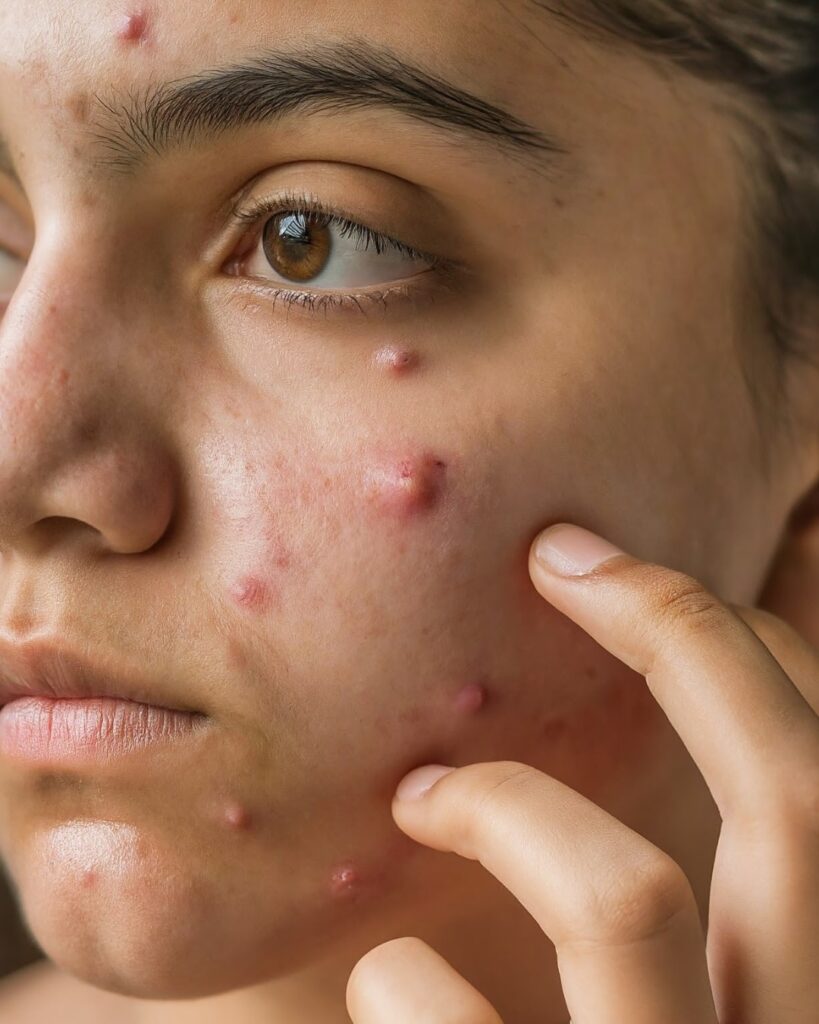
Teenage Acne: Causes, Triggers & Why Teens Get Breakouts
When trying to understand the causes of teenage acne, it helps to know that you are not alone. While puberty breakouts are an entirely normal part of adolescence, dealing with constant pimples can feel deeply frustrating and isolating. At Derma Clinic, our dermatology team works with teenagers daily to uncover their specific acne triggers and develop targeted solutions. The most important takeaway is that teenage acne is highly treatable once you understand the science behind exactly why it happens.
Here is everything you need to know about the biology of your breakouts, common aggravators, and how to take control of your skin health.
Why Do Teenagers Get Acne? The Biological Chain
To understand teenage acne, it helps to look at the exact chain of events happening beneath the surface of your skin. Acne does not just appear out of nowhere; it follows a specific, predictable biological process:
- Puberty begins: The body starts producing higher levels of androgen hormones.
- Glands activate: These hormones stimulate the sebaceous (oil) glands in the skin.
- Excess oil is produced: The glands pump out more sebum than the skin actually needs to stay moisturized.
- Pores become blocked: The excess oil mixes with dead skin cells, creating a sticky plug inside the hair follicle.
- Bacteria multiply: Cutibacterium acnes (C. acnes) bacteria, which naturally live on the skin, thrive and multiply rapidly inside this trapped, oily environment.
- Inflammation occurs: The body’s immune system attacks the bacterial overgrowth, leading to the redness, swelling, and pus we recognize as a pimple.
The Core Causes of Teenage Breakouts
While the biological chain explains how a pimple forms, several underlying causes set that chain into motion.
1. Hormonal Changes During Puberty
The transition into adolescence brings massive changes to the body. The surge of androgens (like testosterone, which is present in everyone) is the primary catalyst for teenage acne. Because hormone levels fluctuate heavily during puberty, breakouts are often persistent and unpredictable. If you are experiencing deep, painful cysts primarily along your jawline or chin, it may be worth getting a comprehensive evaluation for hormonal acne.
2. Excess Sebum and Follicular Plugging
Because of the hormone surge, many teenagers develop a naturally oily skin type. When this excess oil traps the dead skin cells that naturally shed from your face every day, it creates a microscopic plug known as a comedo. If the plug remains beneath the surface, it forms a whitehead. If it opens to the surface and oxidizes in the air, it turns dark and becomes a blackhead.
3. The Proliferation of C. acnes Bacteria
Your skin naturally hosts a complex microbiome. C. acnes bacteria thrive in environments that lack oxygen—like the inside of a clogged, oil-filled pore. This bacterial overgrowth is what turns a simple clogged pore into an inflamed, tender spot.
4. Genetic Predisposition
Genetics dictate a massive part of how our skin behaves. If your parents dealt with severe acne during their teenage years, there is a strong statistical probability that you will experience it too. Your genes determine how sensitive your oil glands are to circulating hormones and how aggressive your body’s inflammatory response is.
Common Acne Triggers in Teenagers (Aggravators)
While biology and genetics are the root causes, external factors can act as triggers that make existing teenage acne much worse.
Stress
Stress does not directly create pimples out of nowhere, but it absolutely aggravates existing acne. High stress elevates cortisol levels, which triggers oil glands to produce even more sebum and slows down the skin’s natural healing process.
Friction and Sweating (Acne Mechanica)
Acne mechanica is a specific type of breakout triggered by friction, heat, and pressure. In teenagers, this is frequently caused by sports equipment (like helmets or chin straps), tight clothing, backpacks, or constantly resting your face on your hands. Sweating heavily and not showering immediately afterward can also trap bacteria against the skin.
Skincare Habits and Product Choices
Using harsh physical scrubs can cause micro-tears in the skin and spread bacteria across your face. Furthermore, applying heavy, pore-clogging cosmetics or hair products will trap oil and debris.
Here is a quick guide on what to look for when choosing daily skincare products:
| Product Type | Ingredients to Avoid (Comedogenic) | Ingredients to Look For (Non-Comedogenic) |
| Moisturizers | Cocoa butter, coconut oil, mineral oil | Hyaluronic acid, glycerin, ceramides |
| Cleansers | Sodium lauryl sulfate (SLS), alcohol | Salicylic acid, gentle foaming agents |
| Sunscreens | Heavy silicones, thick creams | Zinc oxide, titanium dioxide, gel-based formulas |
Can Diet Cause Teenage Acne?
The relationship between diet and acne is still being studied, but research suggests that what you eat may influence acne in some people. Diets high in refined sugars and high-glycemic carbohydrates, such as white bread, sugary drinks, and processed snacks, can cause rapid increases in blood glucose and insulin. These changes may affect hormone signaling, oil production, and inflammation, potentially making acne worse. Diet is only one of several factors involved in teenage acne, alongside puberty-related hormonal changes, genetics, excess sebum, and clogged pores.
To learn more about how diet may affect your skin, read our guide on foods that may cause acne.
Teenage Acne Myths: Fact vs. Fiction
There is a lot of misinformation surrounding acne. Let’s clear up a few common myths:
- Myth: Dirty skin causes acne. Fact: Acne is not caused by dirt. Washing your face more than twice a day or scrubbing vigorously will actually strip your skin barrier, causing irritation and making acne worse.
- Myth: Chocolate and greasy food cause pimples. Fact: While a consistently high-sugar diet can aggravate acne, eating a slice of pizza or a piece of chocolate does not directly translate to a pimple the next day.
- Myth: Sunscreen clogs pores. Fact: Sun protection is vital, especially since many acne treatments make your skin sensitive to UV rays. You simply need to choose lightweight, “non-comedogenic” sunscreens formulated for acne-prone skin.
When Should a Teenager See a Dermatologist?
While mild acne can often be managed with over-the-counter cleansers containing salicylic acid or benzoyl peroxide, you should seek professional medical care if you experience:
- Deep, painful, or cystic acne.
- Acne that is leaving dark spots or permanent indented scars.
- Breakouts that do not improve after 8 to 12 weeks of a consistent over-the-counter routine.
- Acne that is causing significant psychological distress, anxiety, or a drop in self-esteem.
How Is Teenage Acne Treated?
Dealing with teenager acne requires a strategic, medical approach rather than guesswork. Treatment plans vary based on severity but often include topical retinoids (to increase cell turnover), topical or oral antibiotics (to control bacteria), and specialized in-clinic extractions or therapies. Derma Clinic offers comprehensive evaluations to identify exactly what is triggering your breakouts and create a personalized roadmap to clear skin.
Frequently Asked Questions (FAQ)
Is teenage acne permanent?
Acne itself is not permanent, but it can be a recurring condition throughout your teenage years and into early adulthood. With proper, consistent treatment, active acne can be resolved.
Does popping my pimples make them go away faster?
No. Squeezing a pimple forces bacteria and debris deeper into the skin, drastically increasing inflammation, delaying the healing process, and raising your risk of permanent scarring.
Does all acne leave scars?
No, not all acne leads to scarring. Scarring is much more common with severe forms of acne, such as deep nodules and cysts, or when you pick, pop, or forcefully squeeze your pimples.
How do I identify my specific acne type?
Acne presents in several forms. Whiteheads and blackheads are clogged pores (non-inflammatory), while papules and pustules are red, tender bumps often containing pus (inflammatory). For a deeper breakdown, check out our frequently asked questions about acne.
How long does an acne treatment take to work?
Skin cycles take time. Whether you are using over-the-counter products or a prescribed medical regimen, you should expect to wait 6 to 8 weeks before seeing noticeable improvements. Consistency is the most important factor.
Can I wear makeup if I have acne?
Yes, but you must choose products carefully. Always look for makeup explicitly labeled “non-comedogenic” or “oil-free,” and ensure you completely remove it every night with a gentle cleanser so debris isn’t trapped in your pores while you sleep.
Reach Out for Professional Care
If over-the-counter methods aren’t giving you the results you want, don’t wait for your acne to worsen or leave lasting scars. Professional, personalized treatment makes all the difference.
Derma Clinic Kathmandu is dedicated to helping you achieve healthy, clear skin with science-backed solutions.
Contact Derma Clinic Kathmandu
- 📍 Address: 4th Floor Bishal Bhawan, Basundhara Chowki, Near Petrol Pump, Kathmandu 44600
- 📞 Phone: 9801358600
- 🌐 Book an Appointment: Contact Us for a Consultation
References & External Reading
(Direct, raw URLs with no Google wrappers)
- American Academy of Dermatology Association. (n.d.). Acne: Who gets and causes. Retrieved from: https://www.aad.org/public/diseases/acne/causes/acne-causes
- National Institute of Arthritis and Musculoskeletal and Skin Diseases. (2023). Understanding Acne. Retrieved from: https://www.niams.nih.gov/health-topics/acne
- Bowe, W. P., et al. (2010). Diet and acne. Journal of the American Academy of Dermatology, 63(1), 124-141. Retrieved from: https://pubmed.ncbi.nlm.nih.gov/20338665/