
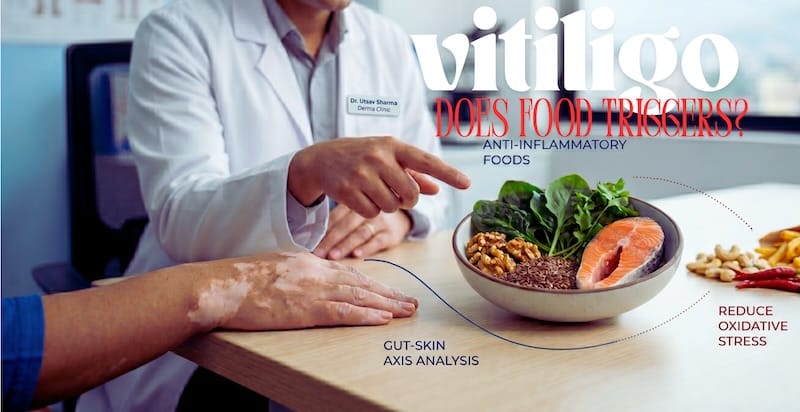
Medically reviewed by the Dr. Utsav Sharma at Derma Clinic Kathmandu | Last updated: May 2026
If you’ve been living with vitiligo, you’ve probably heard a dozen different opinions about what you should and shouldn’t eat. Some say avoid citrus. Others say go completely gluten-free. A few well-meaning relatives might tell you to skip fish and curd for life.
So what does the actual science say?
At Derma Clinic Kathmandu, we get this question from patients almost every week. The honest answer is nuanced — no single food directly causes or cures vitiligo, but diet plays a real, biologically measurable role in how your immune system and skin cells behave. Understanding that connection can help you make smarter food choices that work alongside your medical treatment, not against it.
Why Does Diet Affect Vitiligo? The Science Behind It
To understand which foods are problematic, you first need to understand the two core mechanisms that connect your diet to your skin.
Oxidative Stress and Your Melanocytes
Melanocytes — the pigment-producing cells responsible for your natural skin color — are unusually vulnerable to a process called oxidative stress. Oxidative stress occurs when harmful molecules called reactive oxygen species (ROS) accumulate faster than your body can neutralize them.
In people with vitiligo, research confirms that oxidative stress levels in the skin are significantly elevated compared to healthy controls. This stress damages melanocytes directly, causes mitochondrial dysfunction, and triggers what scientists call the unfolded protein response (UPR) — an internal alarm system inside cells. When the UPR fires repeatedly, it prompts the release of inflammatory signals including IL-6 and IL-8, which alert the immune system to attack melanocytes. The result: your own immune system destroys your remaining pigment cells, spreading the white patches further.
The Gut–Skin Axis: Powerful New Evidence
The second mechanism is the gut–skin axis — the biological communication channel between your digestive system and your skin. This is no longer fringe science.
A landmark 2025 study found that gut microbiota directly regulate oxidative stress levels in vitiligo skin. When gut bacteria were disrupted in vitiligo models, ROS accumulation increased sharply, worsening melanocyte damage. The key molecule identified was hippuric acid — a compound produced by gut bacteria that crosses into the bloodstream and drives oxidative stress in the skin. A 2025 Frontiers in Microbiology review further confirmed that gut microbiota metabolites directly influence vitiligo progression.
What you eat shapes your gut bacteria. Your gut bacteria shape your skin health. This is precisely why diet matters.
Top Foods to Avoid or Limit with Vitiligo
These aren’t arbitrary restrictions. Each category below has a specific biological mechanism backed by peer-reviewed research.
1. High-Phenol Foods
This is one of the most evidence-based dietary concerns in vitiligo. Certain plant-derived phenols and polyphenolic compounds have been shown to induce direct toxicity in melanocytes. When melanocytes are exposed to these phenolic compounds, they activate the UPR pathway and trigger the release of inflammatory cytokines from surrounding keratinocytes — escalating immune activity against pigment cells.
A foundational study published in the Indian Journal of Dermatology, Venereology and Leprology specifically identified phenol-rich foods as potential vitiligo aggravators at high intake levels. A 2019 study in the Journal of Investigative Dermatology further confirmed the mechanism by which 4-substituted phenols selectively destroy melanocytes.
Limit or monitor your intake of:
- Mango, cashews, pistachios
- Areca nut (betel nut — widely chewed in South Asia, including Nepal)
- Red chilies
- Cherries, raspberries, cranberries, blackberries (in large quantities)
- Heavy black tea consumption
- CassavaImportant: This doesn’t mean permanently eliminating all berries or fruit. It means being aware that in consistently high quantities, these foods may act as triggers — particularly during active flare-up phases.
2. Processed Foods, Refined Carbohydrates, and Sugar
A diet high in refined carbohydrates and sugary foods is one of the fastest ways to increase systemic inflammation. When blood sugar spikes repeatedly, it promotes the formation of Advanced Glycation End Products (AGEs) — harmful compounds created when sugar binds to proteins or fats in the body.
AGEs cause direct oxidative damage to skin cells and alter protein structures, potentially creating new targets for an already overactive immune system to attack. Research has linked diets high in refined grains and added sugars to worsened autoimmune inflammatory markers.
Limit:
- White bread, excess white rice, refined pasta
- Soda and sugary packaged drinks
- Pastries, biscuits, commercially baked cakes
- Fast food and deep-fried snacks
- Candy and heavily processed sweets
3. Pro-Inflammatory Fats
Not all fats are equal. Diets heavy in Omega-6 fatty acids — without adequate Omega-3 to balance them — increase free radical production and push the body toward a chronic pro-inflammatory state.
Limit:
- Commercial vegetable oils: soybean oil, sunflower oil, corn oil
- Margarine and hydrogenated (trans) fats
- Processed meats: sausages, hot dogs, salami, baconNote: Saturated fat from whole foods like eggs or ghee is a different matter from industrially processed trans fats. The primary concern here is the omega-6 to omega-3 imbalance and hydrogenated oil consumption — not all dietary fat.
4. Gluten — Only If You Are Sensitive
This is an area requiring precision, as many articles overstate the risk.
Vitiligo is an autoimmune condition, and it does co-occur with other autoimmune disorders at higher rates — including celiac disease. For patients with confirmed celiac disease or non-celiac gluten sensitivity, gluten consumption triggers gut inflammation that amplifies systemic immune activity and can worsen vitiligo.
However, if you have been tested and do not have celiac disease or gluten sensitivity, eliminating gluten is unlikely to benefit your vitiligo and may unnecessarily restrict your diet. The connection between vitiligo and gluten is specifically tied to underlying immune cross-reactivity, not gluten itself.
Recommended approach: If you experience persistent bloating, fatigue, or notice skin flares after wheat-heavy meals, discuss celiac and gluten sensitivity screening with your dermatologist.
If sensitivity is confirmed, limit:
- Wheat, barley, rye, spelt
- Processed foods with hidden gluten (sauces, packaged soups, fried items with batter)
5. Dairy — Context-Dependent
The evidence on dairy in vitiligo is less clear-cut. Some patients report sensitivity — potentially linked to A1 casein protein found in conventional cow’s milk, which can promote gut inflammation in susceptible individuals. However, dairy is not a universal vitiligo trigger.
Plain, unsweetened yogurt may actually be beneficial due to its probiotic content, which supports the gut microbiome — the very system shown to regulate vitiligo-related oxidative stress.
Monitor your personal response to:
- Large daily quantities of cow’s milk
- Processed cheese and heavily dairy-laden foods
If you notice no reaction, there is no strong clinical evidence to eliminate dairy entirely.
6. Alcohol and Artificial Additives
Excessive alcohol depletes the body’s antioxidant reserves — including glutathione, one of the key protective molecules inside melanocytes. A depleted antioxidant defense system leaves pigment cells significantly more vulnerable.
Artificial food colorings (such as tartrazine/Yellow 5, Red 40) and synthetic chemical preservatives may also irritate the gut lining in sensitive individuals, contributing to the kind of gut dysbiosis directly linked to worsened vitiligo in 2025 research.
Limit:
- Regular or heavy alcohol consumption
- Ultra-processed foods with synthetic dyes
- Foods with heavy chemical preservatives (sodium benzoate, BHA, BHT)
The Citrus and Sour Food Debate: Fact vs. Tradition
In South Asian traditional medicine — including Ayurvedic practice widely followed in Nepal — vitiligo patients are routinely told to avoid sour foods: citrus fruits, curd, tomatoes, pickles, and tamarind.
Here is the honest clinical answer:
The scientific evidence does not support a blanket ban on citrus. Vitamin C (ascorbic acid), found abundantly in oranges, lemons, and limes, is actually a potent antioxidant that directly counters the oxidative stress known to damage melanocytes. Eliminating it without reason removes a genuinely protective nutrient from your diet.
That said, some patients do report anecdotal flare-ups with acidic foods — possibly related to individual gut sensitivity or specific microbiome composition. Given that the gut–skin axis is highly individualized, this is not something to dismiss entirely.
Our clinical recommendation: Do not eliminate citrus unless you personally observe a consistent, repeatable pattern of flares after eating it. If you do notice a connection, reduce intake temporarily and discuss it during your next consultation.
A Note on Turmeric — A Local Nuance for Nepali Patients
Turmeric is a staple in Nepali cooking, and some traditional sources suggest vitiligo patients should avoid it entirely. From a dermatological standpoint, dietary turmeric used in cooking is generally safe — and its active compound curcumin has well-documented anti-inflammatory properties.
The traditional concern relates primarily to high-concentration topical applications and the potential skin-lightening effect of curcumin at therapeutic doses — not the small amounts found in everyday dal, tarkari, or curry. Unless you are applying turmeric directly to your skin in large quantities, cooking with it is not a concern.
What You Should Eat for Vitiligo
The goal is not only to avoid triggers — it’s to actively build an anti-inflammatory, antioxidant-rich internal environment that protects your melanocytes and supports immune balance.
A 2025 comprehensive review on dietary interventions in vitiligo highlighted the importance of antioxidant nutrients, omega-3 fatty acids, and gut-supporting fiber as the strongest evidence-based dietary strategies. The Mediterranean diet has the broadest evidence base for supporting autoimmune conditions.
Build your plate around:
- 🥬 Leafy greens — spinach, kale, methi (fenugreek leaves), mustard greens — rich in folate, Vitamin K, and antioxidants
- 🐟 Omega-3 rich foods — walnuts, chia seeds, flaxseeds, fatty fish like mackerel, sardines, and salmon
- 🫘 Gut microbiome supporters — lentils, chickpeas, beans, whole grains (if no gluten sensitivity), prebiotic vegetables like garlic, onion, and leeks
- 🫚 Healthy fats — extra virgin olive oil, avocado
- 🌿 Anti-inflammatory spices — turmeric (with black pepper for absorption), ginger
- 🍵 Green tea — contains EGCG, a powerful antioxidant that reduces oxidative stress in skin cells
- 🥚 Eggs — rich in tyrosine (essential for melanin synthesis), Vitamin D, and B12
- 🌻 Copper-rich foods — sesame seeds, sunflower seeds, chickpeas (copper is a cofactor for tyrosinase, the enzyme that produces melanin)
Frequently Asked Questions About Vitiligo and Diet
Q: Is there a specific “vitiligo diet” I should follow?
There is no single universally prescribed vitiligo diet. Most dermatologists recommend an anti-inflammatory, antioxidant-rich diet broadly following Mediterranean diet principles. The goal is to reduce oxidative stress and support gut health, both of which directly influence disease activity. Rigid elimination diets without medical guidance often do more harm than good.
Q: Can I eat eggs if I have vitiligo?
Yes. Eggs are generally safe and beneficial for vitiligo patients. They contain tyrosine (an amino acid essential for melanin production), Vitamin D, and Vitamin B12 — all nutrients that support melanocyte function. Unless you have a specific egg allergy, there is no reason to avoid them.
Q: Is fish safe for vitiligo patients?
Yes — and it’s actually encouraged. Fatty fish like mackerel, sardines, and salmon are excellent sources of Omega-3 fatty acids, which reduce systemic inflammation, and Vitamin D, which supports immune regulation. The traditional advice to avoid fish in vitiligo is not supported by modern clinical evidence.
Q: Should vitiligo patients avoid curd (yogurt)?
Plain, unsweetened yogurt is not harmful and may actually be beneficial — it contains live probiotic cultures that support gut microbiome health, which 2025 research directly links to reduced oxidative stress in vitiligo. Flavored, heavily sweetened commercial yogurt is a different matter; the added sugar is the concern, not the dairy base.
Q: Can stress make vitiligo worse, and does diet help with that?
Yes — psychological stress is a well-documented vitiligo trigger. It increases cortisol, which raises oxidative stress and suppresses regulatory immune function. Diet helps indirectly: a gut-healthy diet supports serotonin production (approximately 90% of the body’s serotonin is produced in the gut), which helps regulate mood and stress resilience. Dietary support should complement, not replace, proper mental health care.
Q: Are there any supplements that help vitiligo?
Several nutrients have clinical relevance in vitiligo management:
- Vitamin D — commonly deficient in vitiligo patients; supports immune tolerance
- Vitamin B12 and Folic Acid — low levels correlate with vitiligo activity in multiple studies
- Vitamin C and E — antioxidants that protect melanocytes from oxidative damage
- Zinc — involved in melanin synthesis and immune regulation
- Copper — a cofactor in the enzyme tyrosinase, which produces melanin
Always consult your dermatologist before starting supplements. Unsupervised mega-dosing can be counterproductive and occasionally worsen skin conditions.
Q: Is green tea good or bad for vitiligo?
Green tea is generally beneficial for vitiligo patients. It contains EGCG (epigallocatechin gallate), a powerful antioxidant shown in studies to reduce oxidative stress in skin cells. The polyphenols in green tea differ from the problematic phenols found in cashews or areca nut — moderate green tea consumption (2–3 cups daily) is considered safe and supportive.
Q: Can children with vitiligo follow the same dietary guidelines?
The general principles apply — reduce processed foods, avoid heavy junk food, prioritize antioxidant-rich meals. However, children have different nutritional requirements for growth and development. Never restrict food groups in a child’s diet without guidance from a pediatric dermatologist or a certified nutritionist. Unnecessary elimination diets in growing children can cause nutritional deficiencies.
Q: Can vitiligo be reversed through diet alone?
No. Diet cannot reverse vitiligo on its own. Repigmentation requires functioning melanocytes to be stimulated — which is what medical treatments like NB-UVB phototherapy, topical tacrolimus, and JAK inhibitors achieve. Diet reduces inflammation and helps slow disease progression, but it cannot regenerate already destroyed melanocytes. Think of diet as the soil — medical treatment is still the seed.
Q: How do I know if a particular food is triggering my vitiligo?
Keep a food and skin diary for 4–6 weeks. Log what you eat daily and note any changes in your patches — spreading, new spots, or redness at patch borders. If a consistent pattern emerges with a specific food, discuss it with your dermatologist before making permanent eliminations. Avoid self-diagnosing food triggers without professional input, as confirmation bias is extremely common.
Q: Are pickles, fermented foods, or achaar safe for vitiligo?
This depends on what’s in them. Traditional homemade fermented foods can support the gut microbiome through probiotics. However, commercially produced pickles often contain artificial preservatives, excess vinegar, and high salt — all of which can irritate the gut lining in sensitive individuals. Traditional fermented foods like homemade gundruk (fermented leafy greens common in Nepal) may actually be beneficial in moderation.
Q: Does drinking more water help vitiligo?
Adequate hydration supports overall skin health and helps flush out metabolic waste products. While water alone won’t treat vitiligo, chronic dehydration worsens skin barrier function and can exacerbate inflammation. Aim for 8–10 glasses per day, adjusted for Kathmandu’s seasonal climate — particularly during the dry winter and hot pre-monsoon months.
Q: Can I ever eat mangoes or cashews?
An occasional serving is unlikely to cause a measurable flare. The concern is with consistent, heavy intake of high-phenol foods — not an occasional indulgence during mango season. During active flare-up phases, greater caution is warranted.
Q: How long before dietary changes show an effect on vitiligo?
Gut microbiome composition can begin shifting within 2–4 weeks of a sustained dietary change. However, visible effects on vitiligo patches take considerably longer. Think of diet as a long-term protective strategy, not a quick fix. Patients who combine dietary changes with medical treatment tend to see the best outcomes.
Partner with Your Dermatologist
Vitiligo behaves differently in every patient. What triggers one person’s flares may be completely harmless for another. The gut–skin axis research has confirmed that gut microbiome composition varies enormously between individuals — which is precisely why a one-size-fits-all dietary protocol does not exist.
At Derma Clinic Kathmandu, we take a comprehensive approach to vitiligo management — combining advanced phototherapy, topical treatments, and personalized lifestyle guidance to give your pigment cells the best possible environment to survive and recover.
If you’re noticing new white patches, spreading of existing ones, or want a thorough evaluation of your vitiligo and what’s driving it, Schedule a consultation with expert Dermatologist. We’ll help you build a plan that works for your specific skin — not just a generic internet checklist.
References
- Manga P, et al. (2012). Vitiligo-inducing phenols activate the unfolded protein response in melanocytes resulting in upregulation of IL-6 and IL-8. Journal of Investigative Dermatology.
- Sehgal VN & Srivastava G. (2009). Vitiligo and diet: A theoretical molecular approach with practical implications. Indian Journal of Dermatology, Venereology and Leprology.
- Speeckaert R & van Geel N. (2022). Diet and Vitiligo: The Story So Far. Nutrients, PMC.
- Ezzedine K, et al. (2025). Dietary Interventions, Supplements, and Plant-Derived Compounds for Vitiligo Management. Nutrients.
- Zhang S, et al. (2025). Gut microbiota dysbiosis orchestrates vitiligo-related oxidative stress. PMC.
- Frontiers in Microbiology. (2025). Exploring the influence of gut microbiota metabolites on vitiligo.
- Mechanism of action of 4-substituted phenols to induce vitiligo. (2019). PMC Journal of Investigative Dermatology.
- Biocodex Microbiota Institute. (2026). Vitiligo: the gut microbiota at the heart of skin oxidative stress.
- Medical News Today. (2022). What to eat if you have vitiligo.
- Vitiligo Research Foundation. (2024). Diet for Vitiligo: Eating for Skin Health.
- London Dermatology Centre. (2025). Can Diet and Lifestyle Affect Vitiligo? What the Research Shows.